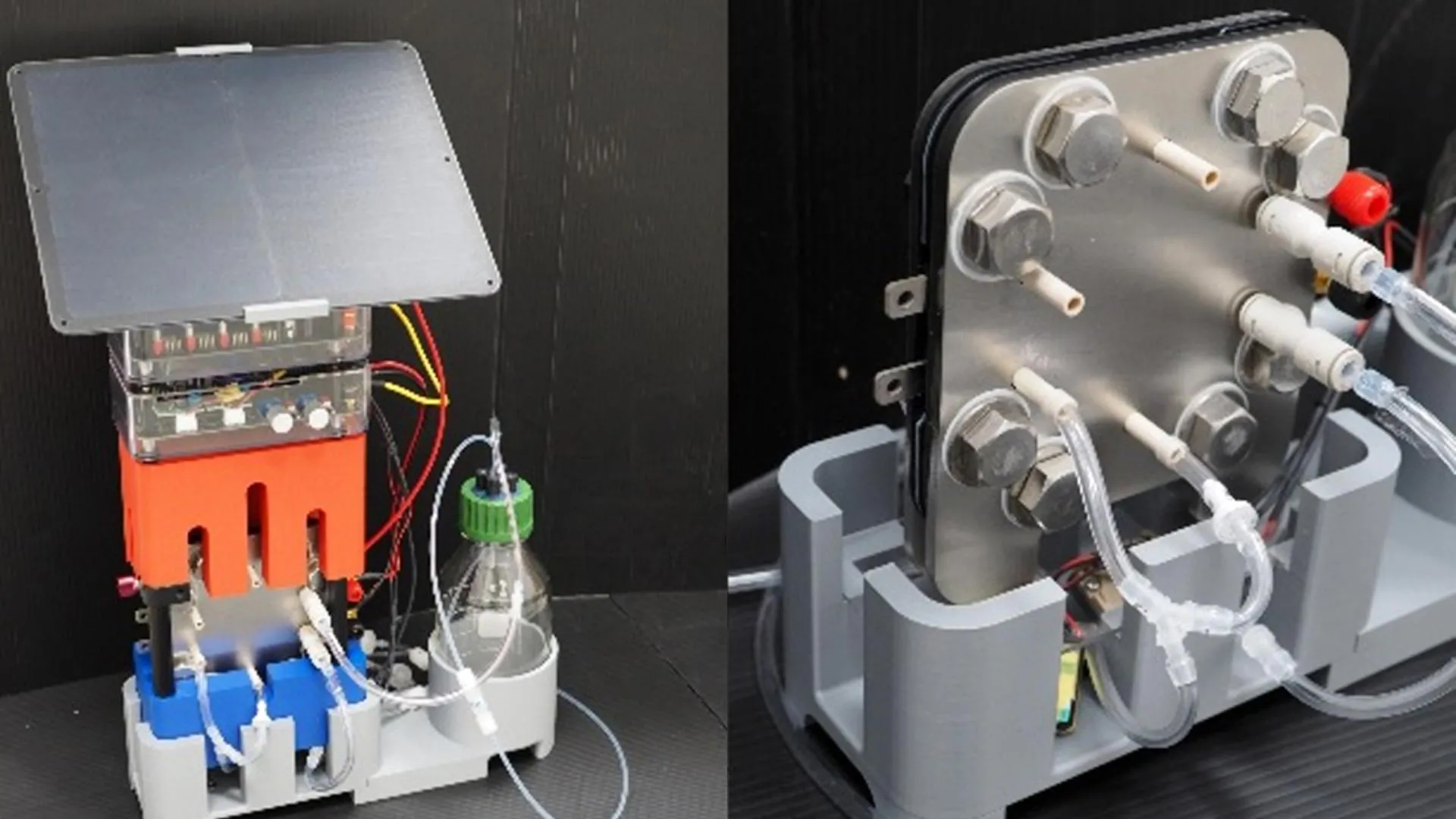
Scientists have developed an artificial photosynthesis system that essentially regulates itself, eliminating the need for batteries used in many current designs. The key innovation is an electrolyzer that automatically adapts to changing sunlight by altering its electrical properties as it heats up. This keeps solar fuel production more stable while reducing cost and complexity.
Advances in materials science and electrochemistry are enabling more sophisticated and autonomous energy conversion systems, pushing boundaries in artificial photosynthesis.
A self-regulating, battery-free artificial photosynthesis system significantly lowers the cost and complexity of producing solar fuels, potentially providing a scalable solution for renewable energy storage.
The development removes major hurdles in solar fuel production by eliminating the need for expensive and maintenance-heavy battery components, making clean fuel generation more efficient and accessible.
- · Renewable energy sector
- · Chemical industry
- · Developing nations with high solar exposure
- · Energy storage companies
- · Traditional fossil fuel companies
- · Current battery manufacturers (for this specific application)
- · Less efficient solar fuel companies
This innovation leads to more widespread adoption of solar fuel production for various applications.
Reduced reliance on external energy grids as communities can generate and store their own fuel locally.
The breakthrough accelerates the decarbonization of industrial processes and transportation, influencing geopolitical energy dynamics.
This signal links to a primary source. Continuum Brief monitors and indexes it as part of the live intelligence stream — we do not republish source content.
Read at ScienceDaily — Robotics