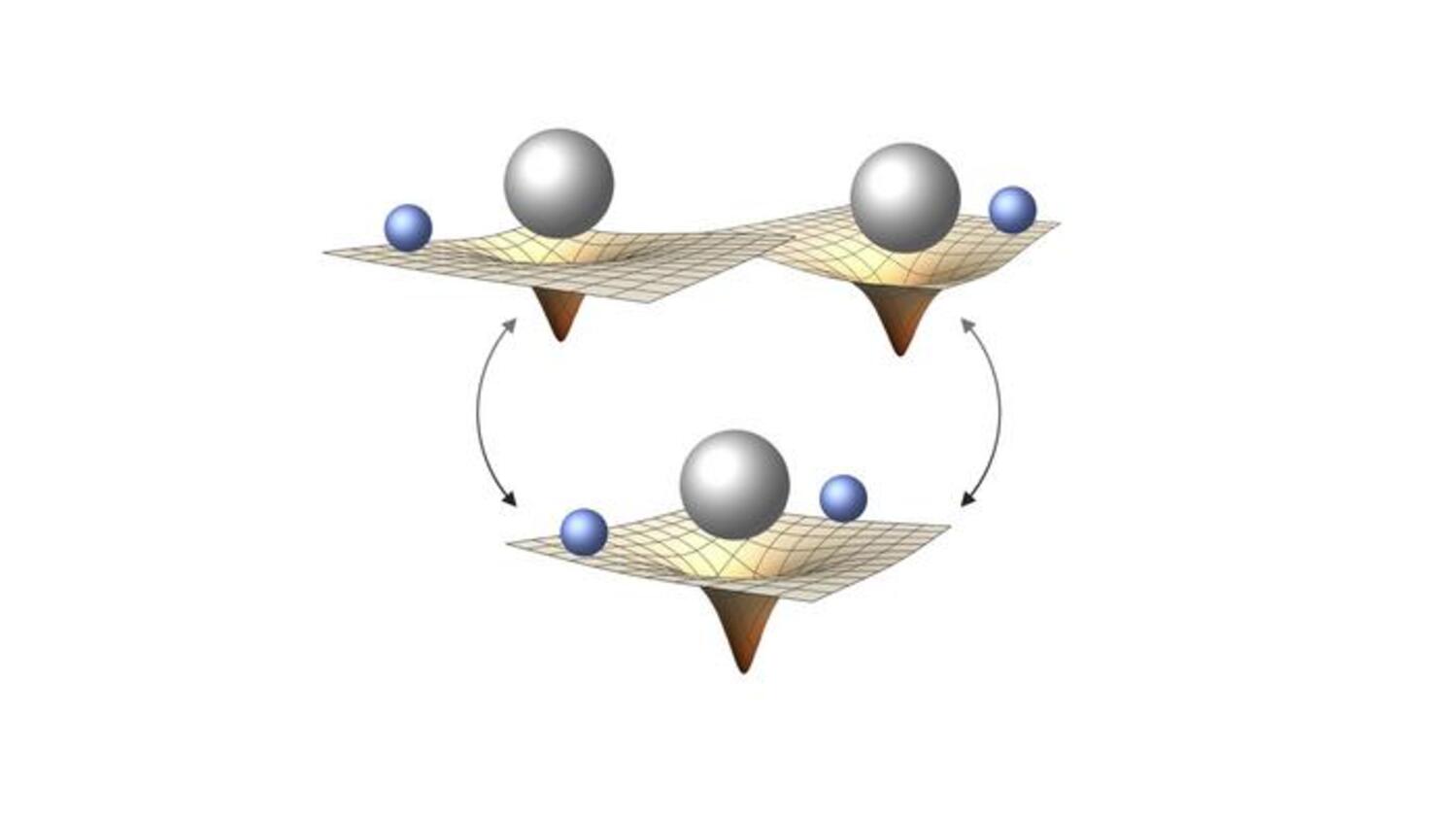
Insider Brief PRESS RELEASE — Everything around us, from atoms and molecules to planets and galaxies, is governed by two extraordinarily successful theories of physics: Quantum mechanics and gravity. Quantum mechanics explains the behavior of the microscopic world, while Einstein’s theory of gravity describes the motion of stars, black holes, and the expansion of the […]
Ongoing fundamental research in quantum physics continues to push the boundaries of understanding at the intersection of quantum mechanics and gravity, with scientists continuously seeking empirical frameworks.
Distinguishing quantum gravity signatures is a crucial step towards a unified theory of physics, with potential long-term implications for novel technologies and a deeper understanding of the universe.
This development provides a theoretical framework to guide future experimental efforts, potentially accelerating the advancement of quantum gravity research.
- · Quantum physicists
- · Academic research institutions
- · Fundamental science
- · Classical physics paradigms (in the long run)
The ability to distinguish quantum gravity signatures will provide empirical validation for theoretical models.
Confirmed quantum gravity theories could lead to breakthroughs in computing, materials science, or energy, mirroring the impact of quantum mechanics.
A unified theory of physics might unlock entirely new forms of technology or energy, fundamentally reshaping humanity's capabilities.
This signal links to a primary source. Continuum Brief monitors and indexes it as part of the live intelligence stream — we do not republish source content.
Read at The Quantum Insider