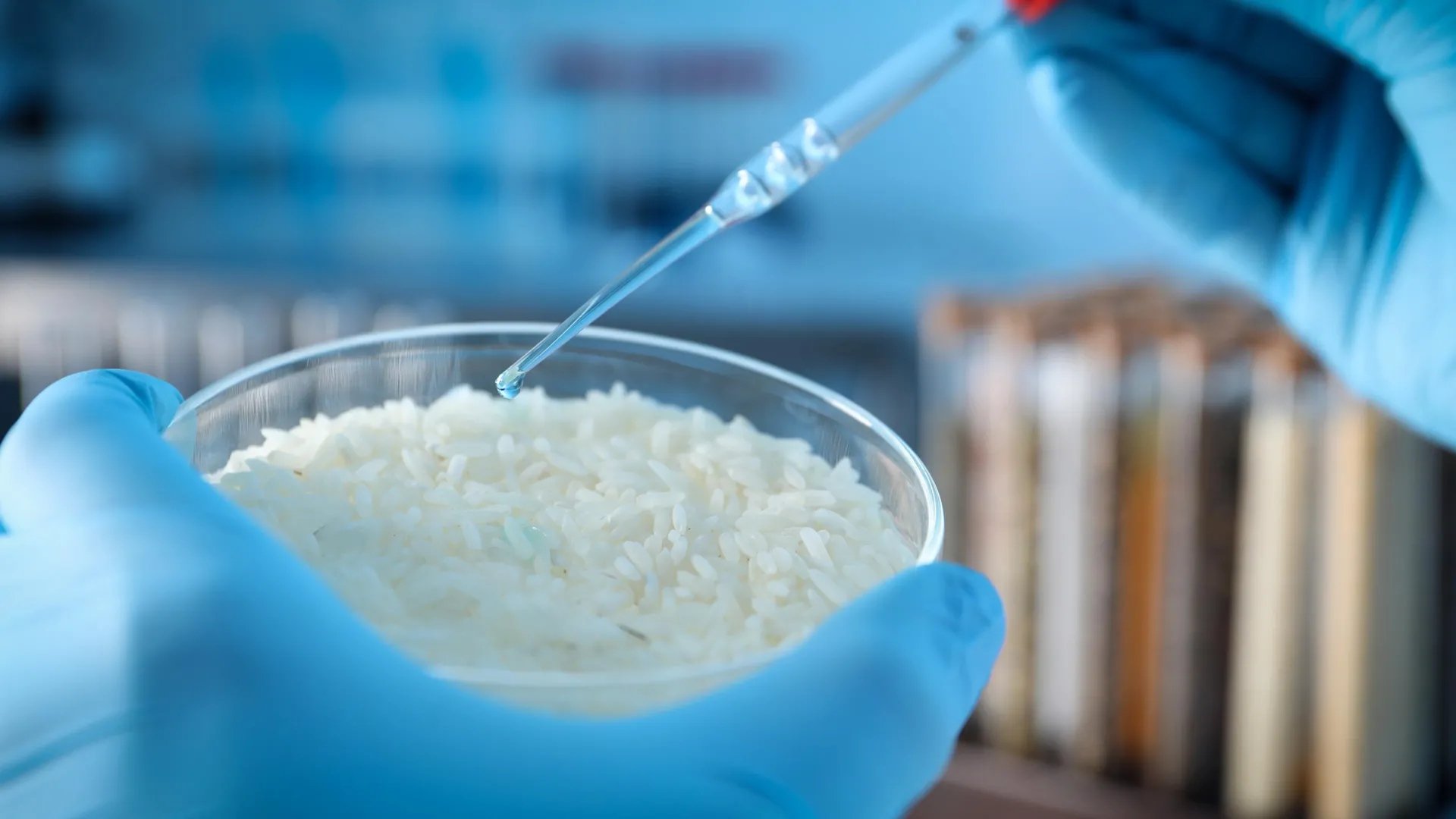
Scientists discovered that rice behaves in a highly unusual way: it weakens under rapid compression but stays stronger when pressure is applied slowly. Using this effect, they engineered a new material that reacts differently to gentle movements and sudden impacts. The material can adapt its stiffness automatically, opening the door to safer soft robots and protective equipment that responds instantly to collisions.
Scientific research into materials science and biomimicry continues to advance, leading to novel discoveries and engineering applications like this 'smart material' from rice.
This discovery offers a new paradigm for adaptive materials, potentially revolutionizing areas from protective gear to robotics by enabling intuitive responses to physical forces.
Materials can now be engineered to precisely control their stiffness based on the speed of applied pressure, opening up new design possibilities for impact absorption and customizable robotic interactions.
- · Soft robotics industry
- · Defense and safety equipment manufacturers
- · Advanced materials research institutions
- · Biomimetics and bio-inspired engineering
- · Traditional rigid protective gear manufacturers
- · Current multi-component adaptive material solutions
- · Companies reliant on single-modality material properties
The immediate application will be in creating safer and more versatile soft robots and protective equipment.
This could lead to a broader adoption of adaptive materials across industries, enhancing product safety and performance in fields from aerospace to consumer goods.
The principle might inspire new architectural designs or infrastructure, where structures could dynamically alter their rigidity in response to environmental stressors or seismic activity.
This signal links to a primary source. Continuum Brief monitors and indexes it as part of the live intelligence stream — we do not republish source content.
Read at ScienceDaily — Robotics