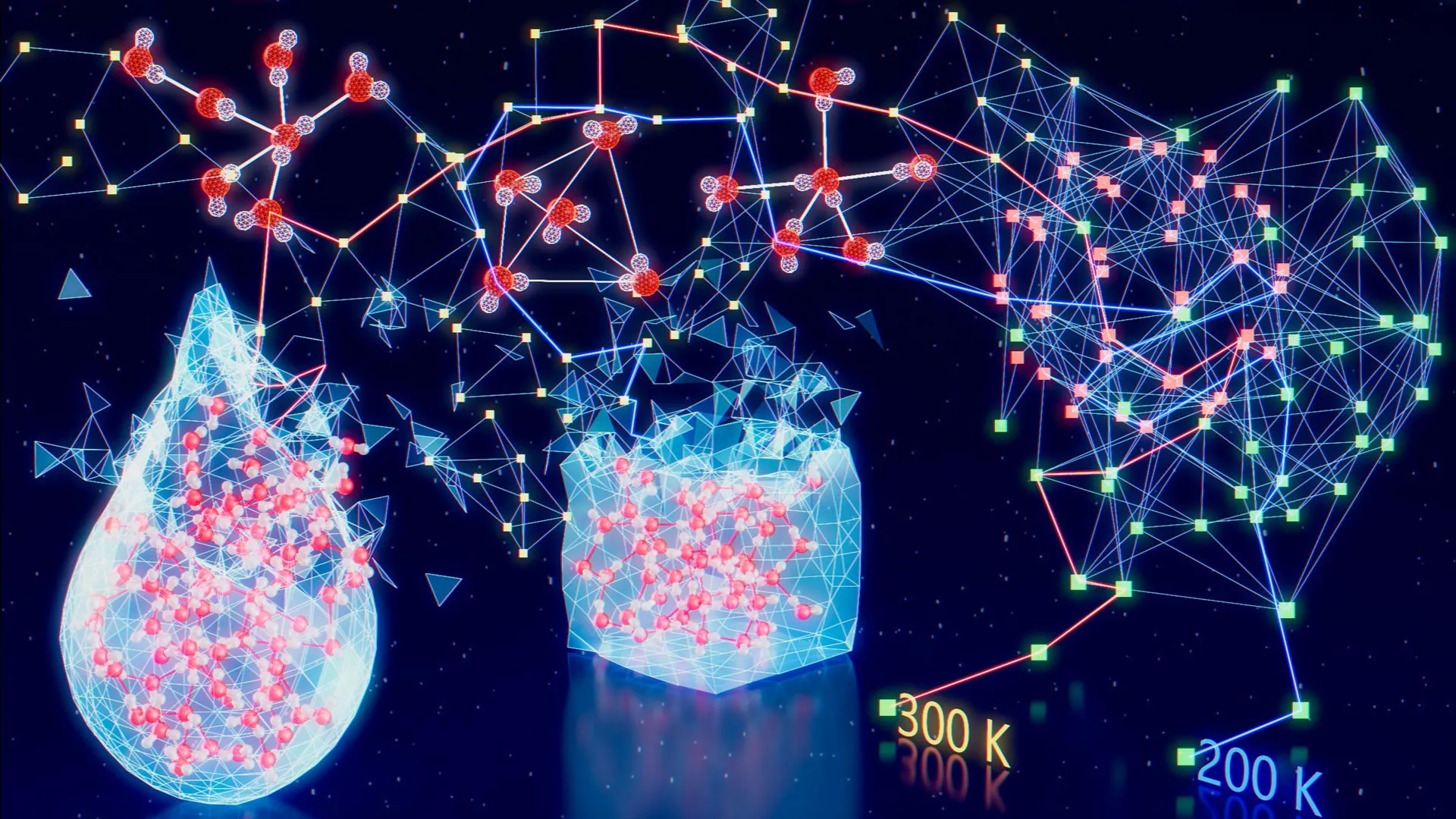
Water’s odd behavior becomes even more dramatic when it is supercooled, but scientists have struggled to compare the many different ways of describing its microscopic structure. Researchers at the University of Osaka used an AI model trained on computer simulations to evaluate 16 different structural descriptors. The system identified the most effective ways to distinguish between water’s two competing liquid states, providing a clearer framework for studying one of nature’s most mysterious substances.
The increasing sophistication of AI models and computational power allows for complex simulations and data analysis to tackle long-standing scientific problems.
Understanding water at a fundamental level has broad implications for various fields, from materials science to climate modeling and life sciences, potentially leading to breakthroughs in diverse applications.
The use of AI to evaluate structural descriptors provides a more effective and standardized framework for studying water's complex phases, accelerating research in this critical area.
- · Materials scientists
- · Climate researchers
- · Computational chemists
- · AI model developers
- · Traditional experimental approaches (potentially slower without AI integration)
Improved understanding of water's properties facilitates the design of novel materials and processes.
New insights into water's behavior could lead to advancements in desalination, energy storage, and drug delivery.
Deeper knowledge of water's molecular intricacies might inform strategies for mitigating hydrological stress and managing water resources more effectively.
This signal links to a primary source. Continuum Brief monitors and indexes it as part of the live intelligence stream — we do not republish source content.
Read at ScienceDaily — Robotics