Self-Healing Kubernetes Gets Real — and Risky: Running AI Agents on Amazon EKS
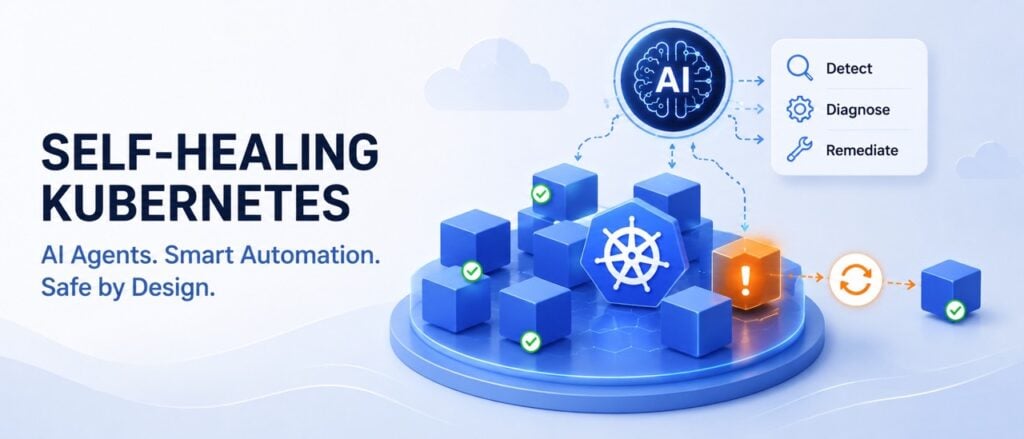
For years, “self-healing Kubernetes” meant a liveness probe restarting a crashed pod. In 2026 it means something far more literal: an autonomous agent that reads your cluster’s logs and metrics, forms a hypothesis about why checkout latency just tripled, drafts a fix, and — if you let it — applies The post Self-Healing Kubernetes Gets Real — and Risky: Running AI Agents on Amazon EKS appeared first on Cloud Native Now .
The increasing complexity of Kubernetes environments, coupled with rapid advancements in AI agent capabilities, is enabling autonomous operations beyond basic liveness probes.
This development indicates a significant shift towards autonomous infrastructure management, potentially leading to substantial operational efficiency gains but also introducing new security and control challenges.
Kubernetes management is evolving from rule-based automation to AI-driven, self-healing systems that dynamically assess and fix issues, fundamentally altering how cloud-native operations are performed.
- · Cloud infrastructure providers (e.g., Amazon EKS)
- · AI agent developers
- · Large enterprises with complex Kubernetes deployments
- · DevOps teams focused on efficiency
- · Traditional IT operations roles (some tasks automated)
- · Companies unable to adapt to AI-driven ops
- · Security teams without AI-specific governance strategies
Kubernetes clusters become more resilient and require less human intervention for routine issues.
New vectors for security vulnerabilities emerge as AI agents gain write access and decision-making authority within critical infrastructure.
The development and adoption of AI-powered infrastructure agents become a competitive differentiator, potentially consolidating market power among leading cloud and AI providers.
This signal links to a primary source. Continuum Brief monitors and indexes it as part of the live intelligence stream — we do not republish source content.
Read at Container Journal