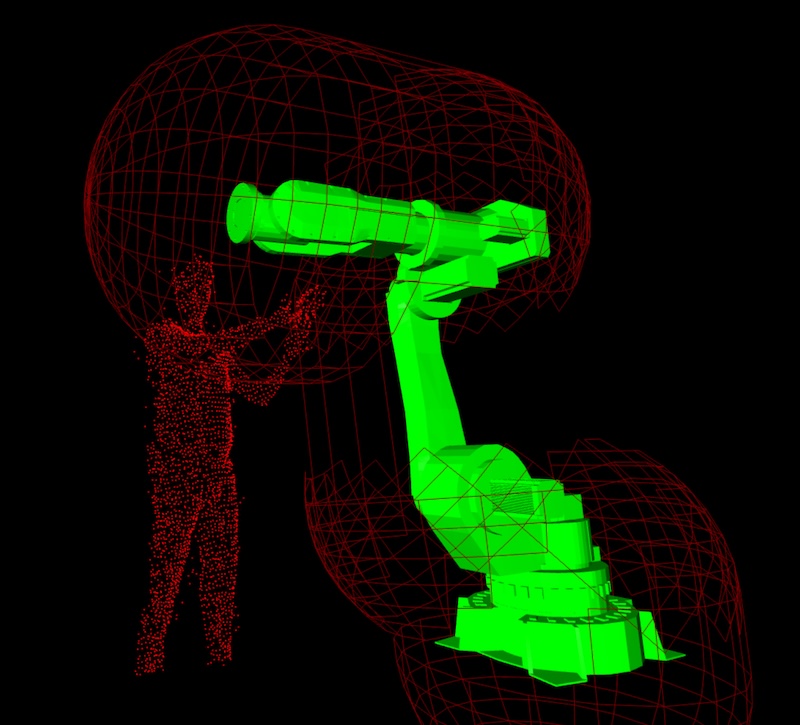
A University of Cincinnati 1819 Innovation Hub corporate partner, Sensory Robotics, says it has “broken through the fence line with a next-generation safety solution”. Their flagship technology, the SR-1 system, is designed to be installed in and integrated with existing industrial robots, setting a new benchmark for how robots can safely transform into cobots and […]
The advancements in sensing and AI technologies are enabling new approaches to industrial safety, making human-robot collaboration more feasible outside traditional protective enclosures.
This innovation significantly lowers the barrier to entry for collaborative robotics, accelerating automation adoption in manufacturing and other industries that have previously been limited by safety requirements.
Industrial robots can now be more easily and safely integrated into human-centric work environments without extensive re-engineering or physical barriers, transforming their utility from isolated automation to collaborative tools.
- · Manufacturing sector
- · Robotics companies
- · 3D vision systems developers
- · Small and medium enterprises
- · Traditional industrial safety barriers manufacturers
- · Companies reliant on highly segregated production lines
Increased deployment of collaborative robots across various industries due to enhanced safety and flexibility.
A surge in demand for workers skilled in programming and maintaining cobots, alongside a shift in job roles on factory floors.
Potential for new business models and products arising from the ability to rapidly reconfigure production lines with collaborative human-robot teams.
This signal links to a primary source. Continuum Brief monitors and indexes it as part of the live intelligence stream — we do not republish source content.
Read at Robotics & Automation News