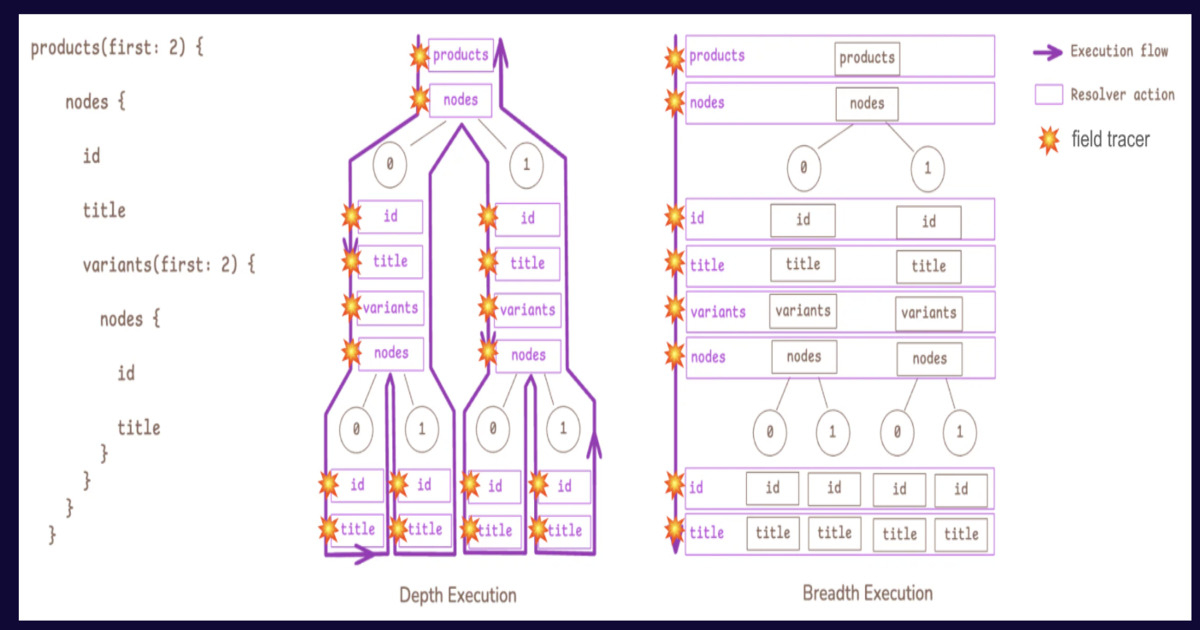
Shopify introduced GraphQL Cardinal, a new execution engine replacing depth-first traversal with breadth-first execution. The redesign improves large-scale GraphQL performance with up to 15x faster field execution, 6x lower GC overhead, and +4s P50 latency gains. It focuses on execution-layer efficiency and batched resolver processing for high-cardinality commerce queries. By Leela Kumili
The continuous demand for higher performance and lower latency in complex distributed systems, especially for large-scale e-commerce platforms, drives ongoing infrastructure innovation.
This innovation demonstrates significant advancements in API performance optimization, directly impacting operational efficiency and user experience for online platforms.
GraphQL execution engines can now achieve substantially faster query processing and reduced resource consumption, setting new performance benchmarks for API-driven architectures.
- · Shopify
- · Companies with complex GraphQL implementations
- · E-commerce platforms
- · Platform engineering teams
- · Platforms with inefficient API architectures
- · Backend systems reliant on prior slower GraphQL execution
Significantly improved performance and reduced operational costs for Shopify's backend and potentially other GraphQL users.
Increased adoption and optimization of GraphQL in other large-scale systems due to demonstrated performance gains.
Potentially, a shift in API design philosophies favoring breadth-first processing for certain types of data queries across the industry.
This signal links to a primary source. Continuum Brief monitors and indexes it as part of the live intelligence stream — we do not republish source content.
Read at InfoQ