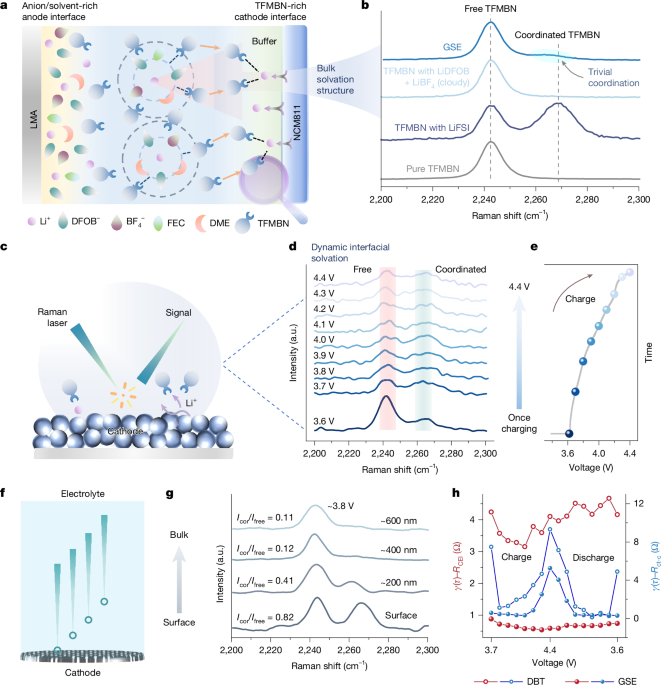
Nature, Published online: 08 July 2026; doi:10.1038/s41586-026-10732-z A targeted ligand anti-solvent is incorporated into an anion-rich ether-based electrolyte and used to achieve lithium metal batteries with a long cycle life, high energy density and high capacity retention.
This research represents a significant advancement in battery technology, specifically addressing a core limitation of lithium metal batteries through a novel electrolyte stabilization method.
Improved lithium metal batteries offer substantially higher energy density and longer cycle life, which is critical for various energy-intensive applications from electric vehicles to grid storage and portable electronics.
The development of a stable electrolyte could enable the commercial viability of lithium metal batteries, offering a superior alternative to current lithium-ion technologies by changing their energy-to-weight ratio.
- · EV manufacturers
- · Renewable energy storage companies
- · Portable electronics industry
- · Battery material suppliers
- · Incumbent lithium-ion battery manufacturers (without adaptation)
- · Fossil fuel-dependent industries (long-term)
Widespread adoption of high-energy-density Li metal batteries in electric vehicles and consumer electronics.
Increased demand for lithium and other raw materials, potentially shifting geopolitical power balance for resource-rich nations.
Acceleration of electrification across all sectors, including aviation and heavy industry, leading to significant reductions in carbon emissions and increased energy independence.
This signal links to a primary source. Continuum Brief monitors and indexes it as part of the live intelligence stream — we do not republish source content.
Read at Nature — Latest Research