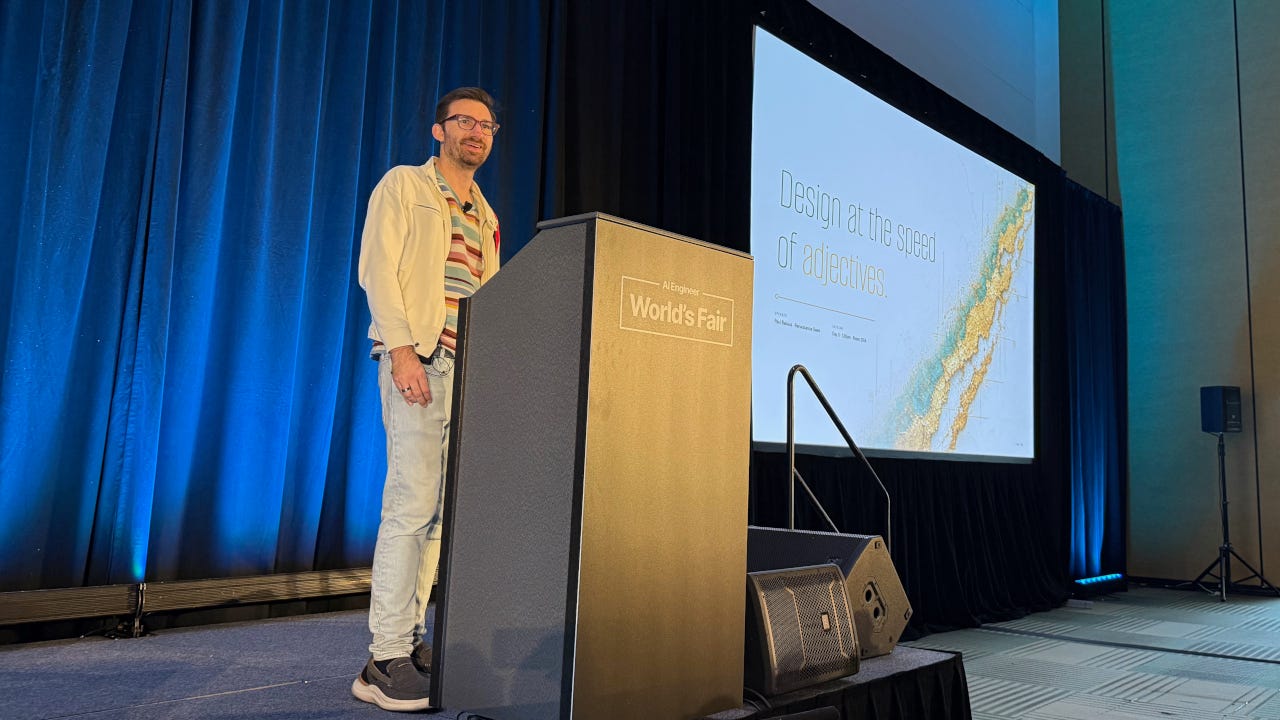
Paul Bakaus talks to us about Impeccable, human judgment in a 'loopmaxxing' era, and why agents still need people to steer them.
The proliferation of AI agents is forcing a re-evaluation of their autonomous capabilities and the necessary role of human oversight.
A strategic reader should care about the evolving understanding of human-AI collaboration, as it dictates the effective deployment and risk management of advanced AI systems.
The expectation that AI agents will operate fully autonomously is being tempered by the practical need for human 'steering,' shifting focus from pure automation to human-in-the-loop design.
- · AI designers focused on human-agent teaming
- · Companies offering 'agent supervision' tools
- · Consultants specializing in AI workflow integration
- · Developers pushing for fully autonomous, black-box AI
- · Investors expecting immediate, unconstrained AI agent deployment
Increased investment in interfaces and protocols for human-agent interaction and control.
New job categories emerge for 'AI agent steers' or 'loopmaxxing' specialists, focusing on optimizing human judgment within AI workflows.
The development of 'impeccable' (context-aware, reliable) AI agents becomes a primary design goal, leading to more robust but potentially slower AI adoption in critical sectors.
This signal links to a primary source. Continuum Brief monitors and indexes it as part of the live intelligence stream — we do not republish source content.
Read at Latent Space