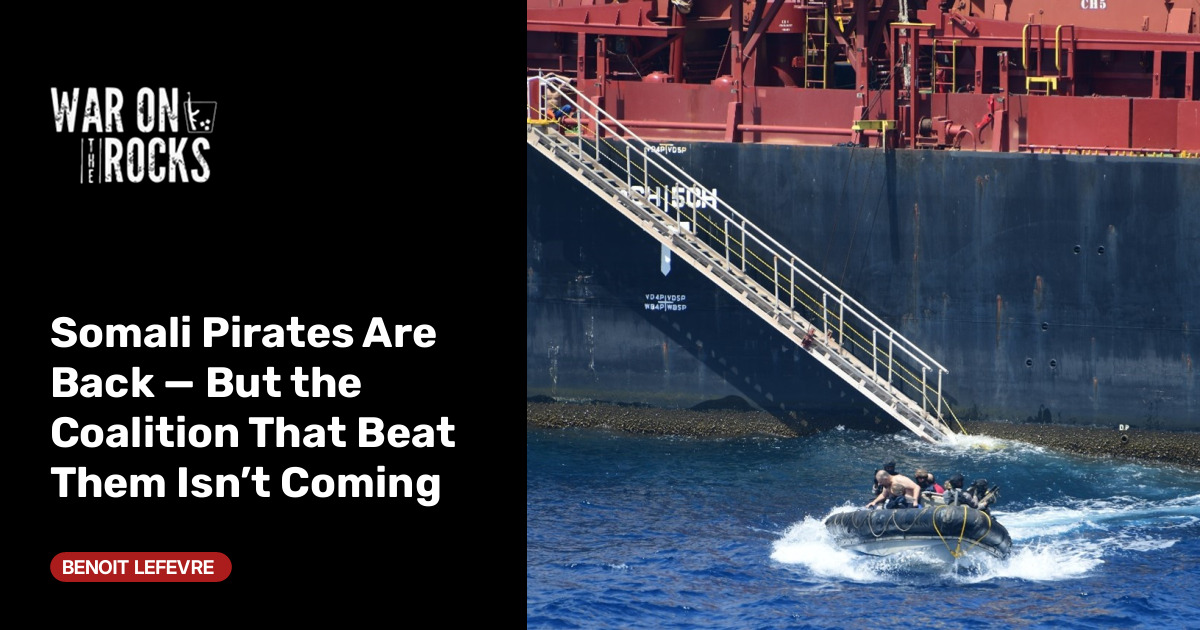
Numerous recent pirate attacks, especially the hijacking of three merchant vessels off the Horn of Africa, are a stark reminder that the conditions for resurgence can return quickly.It took years of sustained, coordinated effort by multinational naval coalitions, the shipping industry, and international organizations to get rid of pirates in the Western Indian Ocean and the Gulf of Aden. Since 2016, many observers have viewed Somali piracy as yesterday’s problem. Shipping companies increasingly treated the threat as manageable, and Western navies no longer prioritized it. However, piracy did n
Numerous recent pirate attacks, especially the hijacking of three merchant vessels off the Horn of Africa, indicate a resurgence of Somali piracy.
The return of piracy impacts global shipping, international trade routes, and highlights the challenges of maintaining security in critical maritime regions without sustained international cooperation.
Shipping companies and navies that had deprioritized the threat will now need to re-evaluate their security postures and potentially re-engage in anti-piracy efforts.
- · Private maritime security firms
- · Naval forces with forward presence
- · Military contractors
- · Shipping companies
- · Global trade
- · Western navies (due to resource strain)
Increased insurance costs for maritime transport through the Western Indian Ocean.
Potential for re-establishment of multilateral anti-piracy coalitions, diverting resources from other strategic priorities.
Long-term shifts in shipping routes or increased calls for independent naval escorts by flag states.
This signal links to a primary source. Continuum Brief monitors and indexes it as part of the live intelligence stream — we do not republish source content.
Read at War on the Rocks