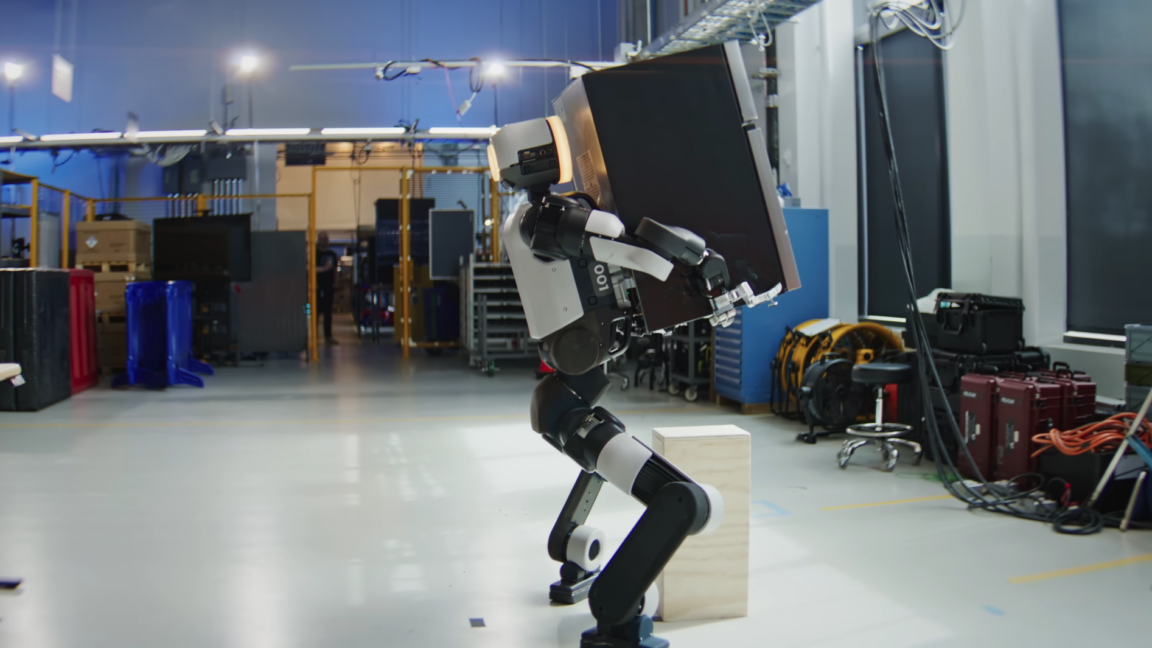
South Korea targets physical AI lead and commercial humanoid robots by 2028.
The global AI race and increasing demand for advanced chips are compelling nations to invest heavily in foundational technologies, and memory shortages highlight vulnerabilities in the current supply chain.
This substantial investment by South Korea, a global leader in memory production, will not only reshape the compute supply chain but also accelerate the development and commercialization of humanoid robotics, impacting multiple industries.
South Korea's aggressive strategy positions it to become a dominant force in AI compute infrastructure and humanoid robot production, potentially reducing dependence on other tech giants and creating new economic blocs.
- · South Korean memory chip manufacturers
- · South Korean robotics companies
- · AI data center operators
- · Hyundai Motor Group
- · Nations dependent on overseas chip production
- · Competitors in humanoid robotics without national backing
- · Existing chip fabrication pure plays (if South Korea gains market share)
South Korea will significantly increase its domestic memory chip production capacity and accelerate humanoid robot R&D and deployment.
Increased supply of advanced memory chips could alleviate current shortages, potentially lowering costs for AI compute infrastructure globally and boosting robot adoption.
South Korea's leadership in both compute and humanoid robots could lead to a new 'AI manufacturing powerhouse' paradigm, influencing global industrial automation and supply chain resilience.
This signal links to a primary source. Continuum Brief monitors and indexes it as part of the live intelligence stream — we do not republish source content.
Read at Ars Technica — AI