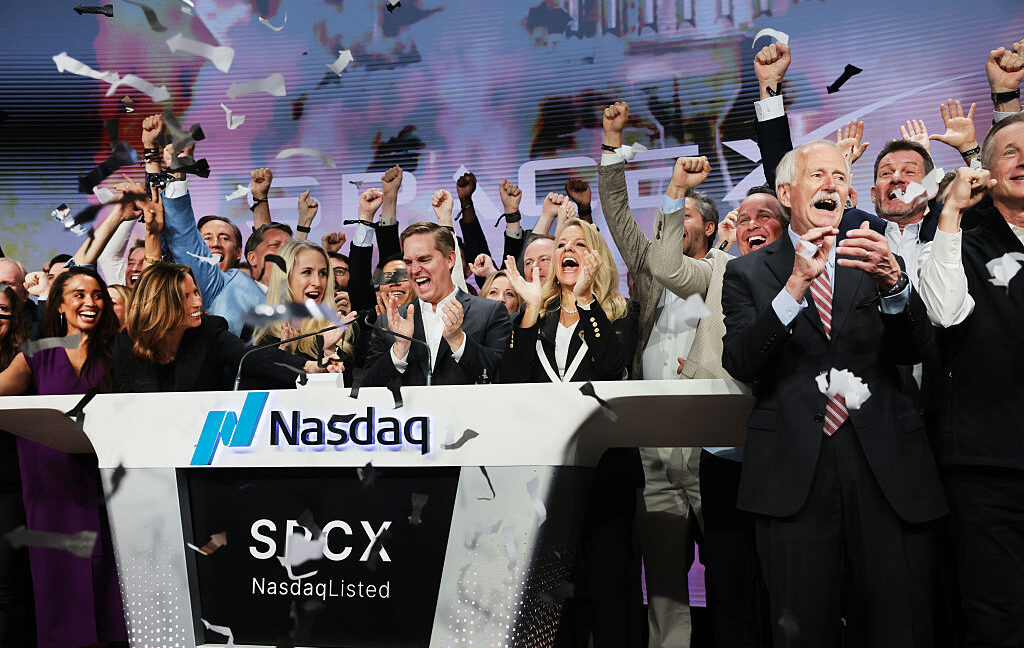
As of today, SpaceX is owned by investors who will want to see it make money.
The private market has matured SpaceX to a point where public ownership and capital infusion are desirable to scale its next phase, particularly given its AI-driven valuation. This moment reflects growing investor appetite for AI-leveraged assets.
This event signifies a major aerospace firm entering the public market with a valuation heavily influenced by its AI potential, demonstrating the perceived intersection of speculative AI value and physical infrastructure. It indicates a new investment paradigm where AI integration is seen as a primary value driver for diverse industries.
SpaceX is now accountable to a broad base of public investors, likely increasing pressure for profitability and accelerated development, including its AI initiatives. This could accelerate the commercialization of its space and AI technologies.
- · SpaceX shareholders
- · AI technology investors
- · Space industry
- · Generative AI infrastructure
- · Traditional aerospace companies (if they fail to incorporate AI)
- · Small investors without early access
SpaceX will have access to significant public capital to fund ambitious projects like Starship and satellite internet expansion, potentially accelerating its technological roadmap.
Other privately held, AI-adjacent technology companies may be pressured to go public or demonstrate their AI leverage to attract similar valuations.
The perception of AI as a 'value multiplier' could drive investment into AI across multiple industrial sectors, regardless of direct applicability or immediate revenue, leading to an 'AI bubble' dynamic.
This signal links to a primary source. Continuum Brief monitors and indexes it as part of the live intelligence stream — we do not republish source content.
Read at Ars Technica — AI