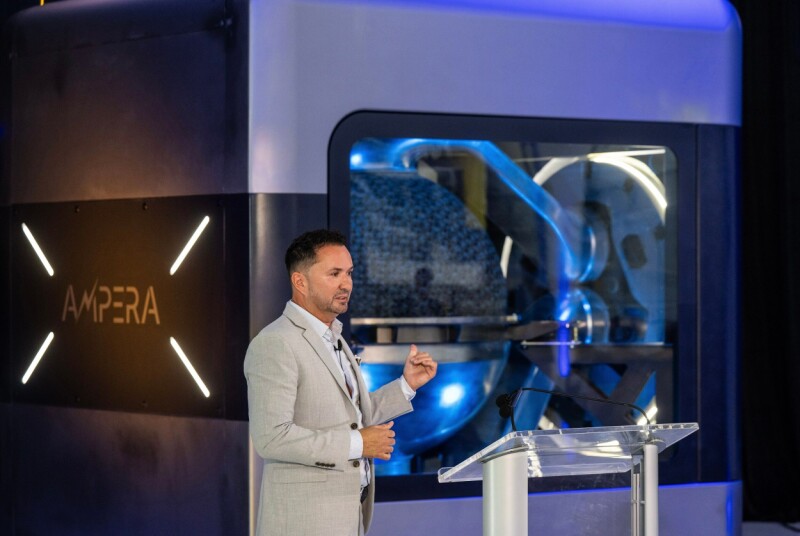
Fancy a thorium microreactor capable of delivering up to 30 MWe of juice for up to 30 years?
The accelerating demand for high-density, reliable power from datacenters, particularly for AI workloads, is driving innovation in modular nuclear energy solutions.
This development addresses a critical bottleneck in the compute supply chain by offering a scalable, localized, and long-duration power source for energy-intensive infrastructure.
The prospect of 3D-printed microreactors could decentralize power generation for datacenters, reducing reliance on traditional grid infrastructure and enabling compute proliferation in new locations.
- · Datacenter operators
- · Nuclear technology startups
- · Advanced manufacturing sector
- · AI compute infrastructure
- · Traditional grid utilities (for certain applications)
- · Fossil fuel power generators
- · Regions without advanced manufacturing capabilities
Datacenters gain access to significantly more stable and abundant power, enabling larger and more powerful AI clusters.
Reduced operational costs and increased energy independence for tech giants and national compute initiatives, potentially accelerating 'sovereign AI' efforts.
Proliferation of energy-intensive industries and scientific research in previously power-constrained regions, leading to new economic hubs.
This signal links to a primary source. Continuum Brief monitors and indexes it as part of the live intelligence stream — we do not republish source content.
Read at The Register