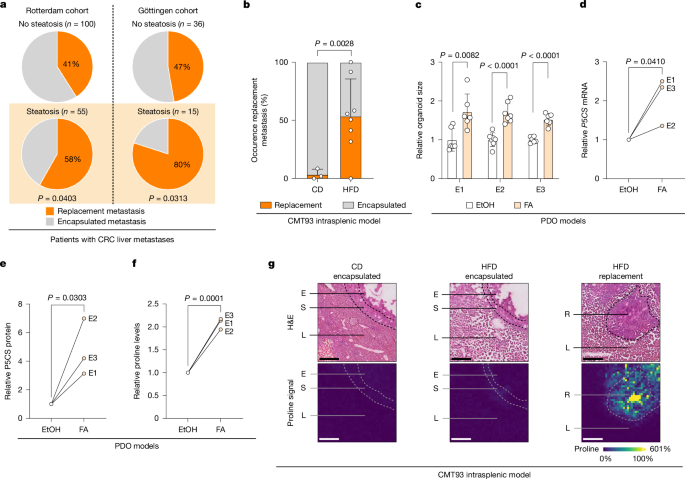
Nature, Published online: 01 July 2026; doi:10.1038/s41586-026-10686-2 Liver steatosis increases formation of replacement liver metastases by increasing MYC stability through acetylation, which increases proline synthesis and collagen production.
This is a new research finding published in a scientific journal, representing a natural progression of medical research into cancer metastasis.
While scientifically significant for understanding cancer biology, this specific finding does not broadly impact strategic readers currently, as it is basic research without immediate translational implications for markets or geopolitics.
Our understanding of the biological mechanisms behind liver metastasis in colorectal cancer has improved, specifically regarding the role of steatosis and MYC stability.
- · Oncology researchers
- · Pharmaceutical companies (long-term drug discovery)
- · Patients (very long-term)
Increased understanding of specific pathways contributing to colorectal cancer liver metastasis.
Potential identification of new therapeutic targets for preventing or treating liver metastases.
Eventual development of novel drugs or interventions based on MYC stability or proline/collagen production pathways.
This signal links to a primary source. Continuum Brief monitors and indexes it as part of the live intelligence stream — we do not republish source content.
Read at Nature — Latest Research