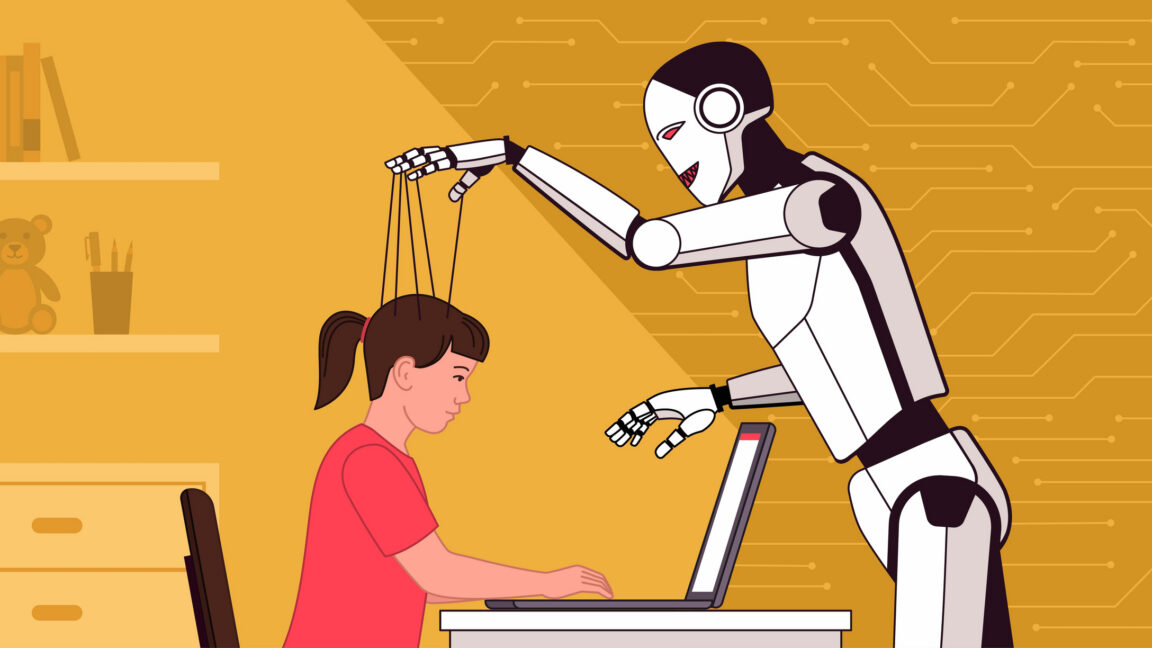
AI cheating leads to "a failed society," professor says.
The rapid proliferation and increasing sophistication of generative AI tools have made AI-assisted cheating easier and more widespread, forcing educational institutions to react.
This incident highlights the immediate and tangible impact of AI on foundational social structures like education, posing questions about academic integrity and the future of skill assessment.
Educational institutions are now forced to re-evaluate their assessment methods, potentially shifting towards more in-person, proctored, or adaptive testing formats, and away from easily automatable assignments.
- · Test proctoring services
- · Educators focusing on critical thinking skills
- · AI detection tool developers
- · Students relying on AI for academic dishonesty
- · Traditional take-home assignments
- · Institutions slow to adapt assessment methods
Universities will increasingly integrate AI detection software and modify examination policies to combat AI-powered cheating.
The value of traditional academic credentials may erode if trust in student achievement is compromised, leading employers to rely more on alternative skill verification.
This could accelerate a broader societal re-evaluation of 'intelligence' and 'knowledge' in an age where information synthesis is augmented by powerful AI.
This signal links to a primary source. Continuum Brief monitors and indexes it as part of the live intelligence stream — we do not republish source content.
Read at Ars Technica — AI