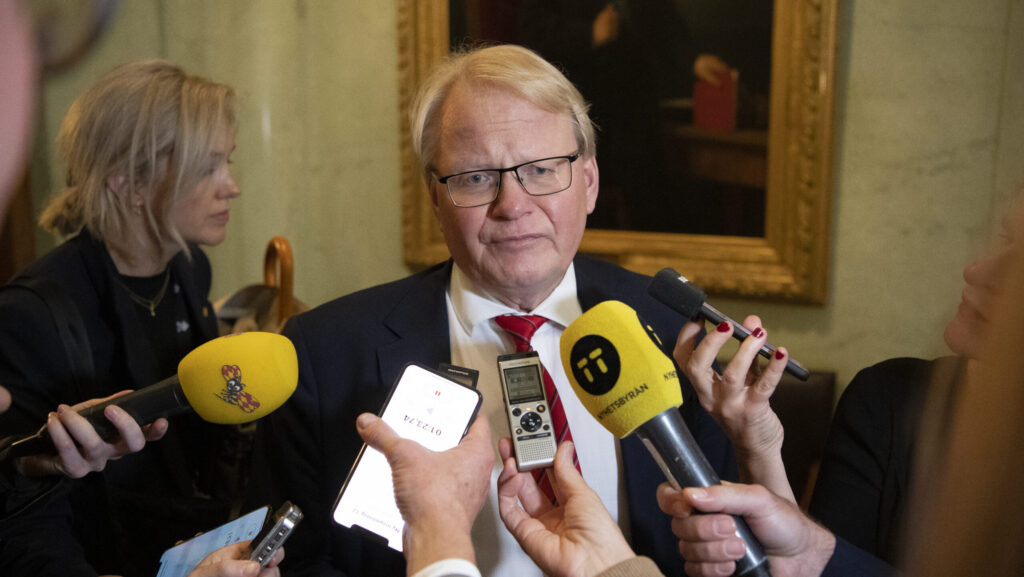
“So I think state part-ownership in Saab would be natural, while at the same time signaling strong Swedish team-building in international contexts,” said Peter Hultquist, whose party is poised to win big in September elections.
The upcoming Swedish elections, with a leading opposition party advocating for increased state involvement in a key defense contractor, provide a near-term catalyst for policy changes regarding industrial state ownership.
This indicates a potential re-evaluation of the role of the state in strategic industries, particularly defense, driven by national security and industrial policy considerations, which could be replicated in other European nations.
The prior assumption of purely private ownership for major defense contractors in Sweden is challenged, introducing state part-ownership as a viable policy option.
- · Saab (potential for stable orders & investment)
- · Swedish government (greater control over industrial base)
- · European state-owned defense companies
- · Private investors (potential for diluted control/returns)
- · Advocates for pure free-market defense industrial models
Swedish state gains direct influence over a critical defense technology company, potentially steering R&D and production.
Other European nations may consider similar policies for their defense industries, impacting the competitive landscape and multinational collaborations.
Increased state ownership could influence technology transfer policies and export controls, potentially impacting global defense markets and alliances.
This signal links to a primary source. Continuum Brief monitors and indexes it as part of the live intelligence stream — we do not republish source content.
Read at Breaking Defense