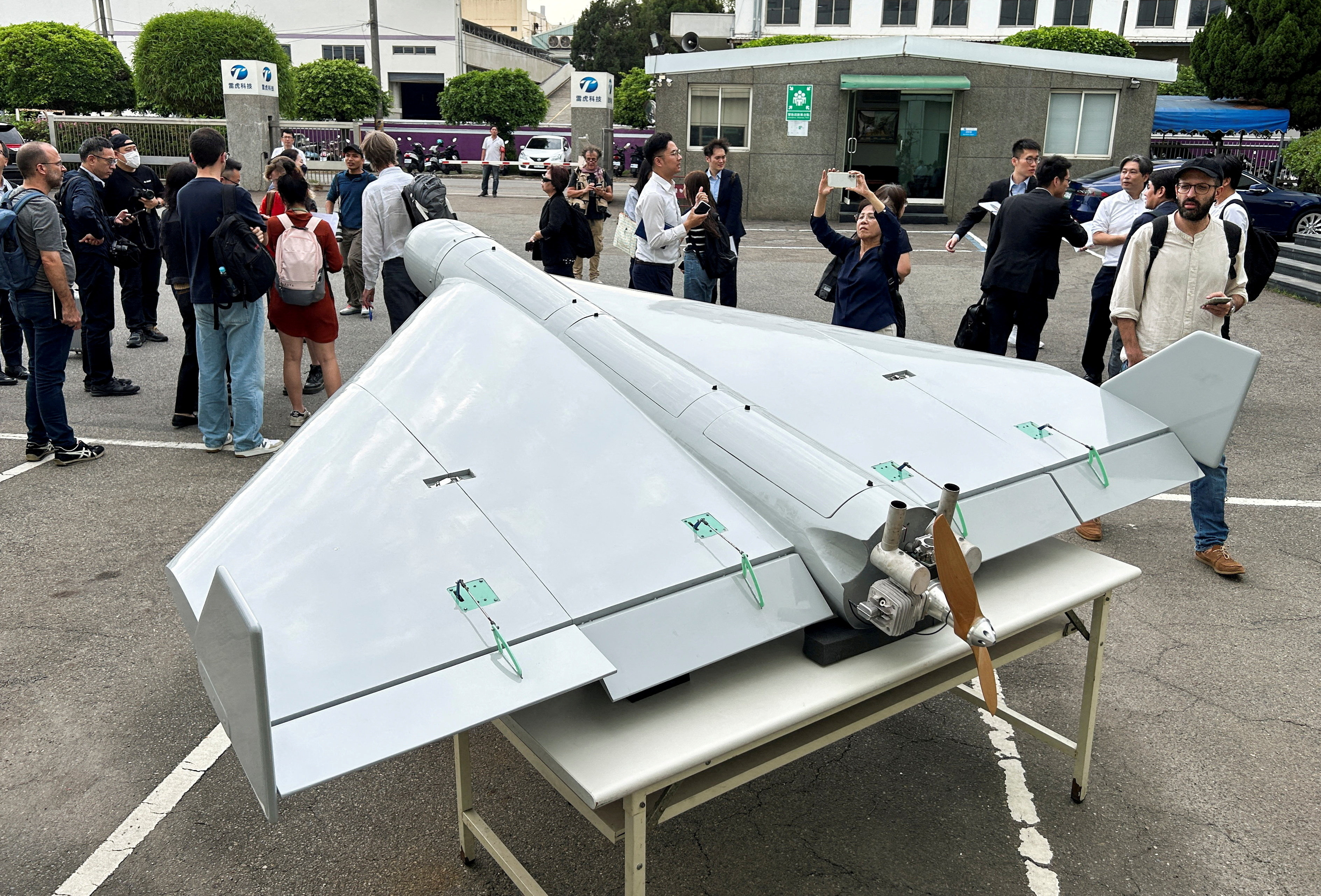
Taiwan says it needs to bolster its defenses in the face of a stepped-up threat from China, which claims the island as its own territory.
The statement from a US diplomat highlights ongoing efforts to deter potential conflict with China, reflecting an immediate strategic imperative. Rapid advancements in drone technology provide new defensive capabilities, making an 'affordable mass' strategy viable now.
This emphasizes a shift towards asymmetric defense strategies leveraging affordable technology to counter a larger adversary, which is crucial for regional stability. It also underscores the growing role of drone technology in modern military doctrine.
Taiwan's defense strategy is increasingly focusing on a decentralized, drone-centric approach, moving beyond traditional platforms. This potentially alters the calculus of invasion and defense in the Indo-Pacific.
- · Taiwan's defense capabilities
- · Drone manufacturers
- · Asymmetric warfare doctrine
- · Traditional military hardware manufacturers
- · Potential aggressors under certain scenarios
Taiwan will likely accelerate procurement and development of various drone systems.
Other nations facing similar threats may adopt or adapt Taiwan's 'hornet's nest' defense model, impacting global defense spending and technology development.
This could lead to a proliferation of advanced drone capabilities, necessitating new international agreements on autonomous weapons and arms control.
This signal links to a primary source. Continuum Brief monitors and indexes it as part of the live intelligence stream — we do not republish source content.
Read at C4ISRNET