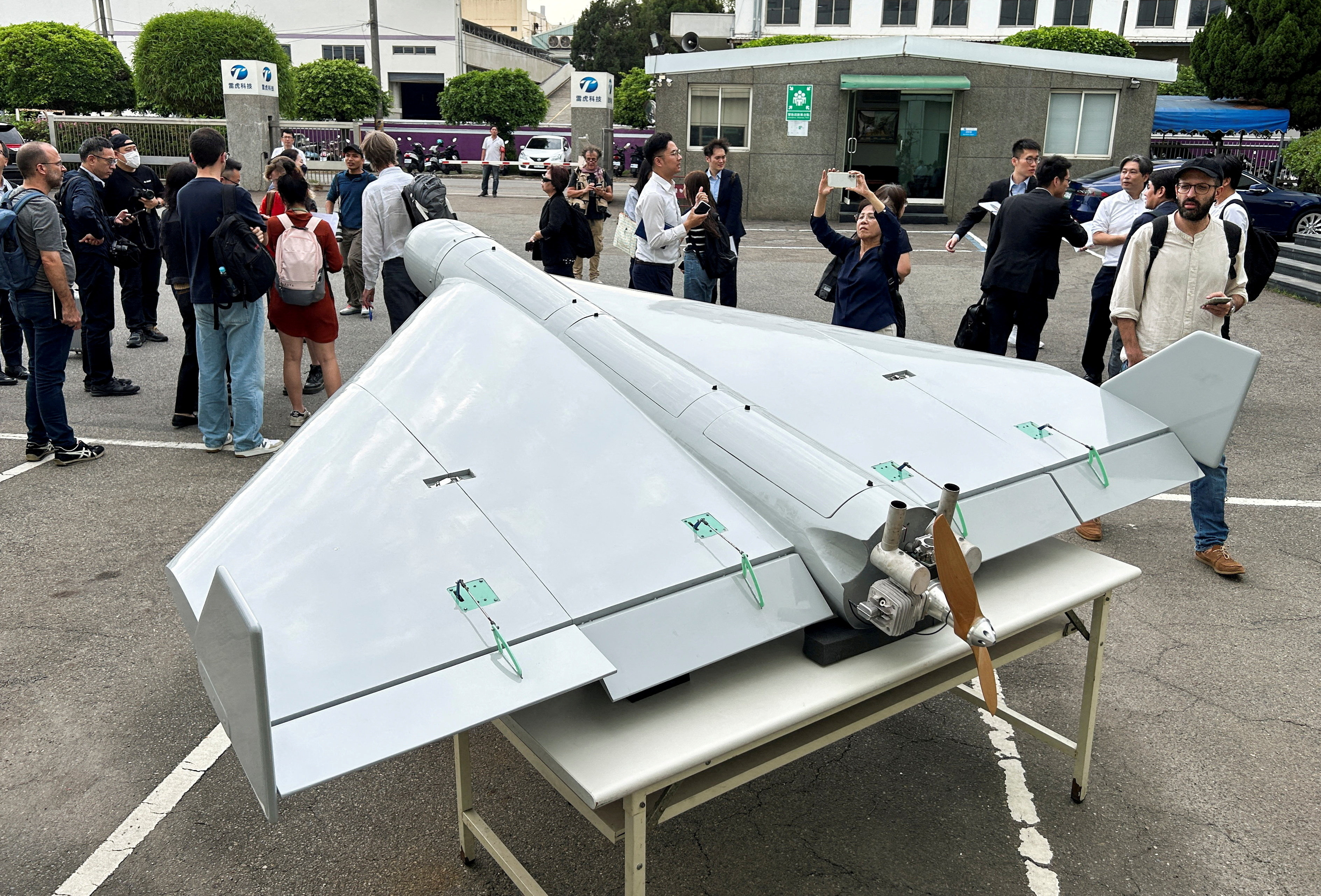
Taiwan says it needs to bolster its defenses in the face of a stepped-up threat from China, which claims the island as its own territory.
Amidst heightened tensions with China, Taiwan is actively seeking to formalize and implement defensive strategies that leverage modern, cost-effective technologies.
This move signals a strategic shift in Taiwan's defense posture, emphasizing asymmetric warfare capabilities, which could influence regional deterrence dynamics and military spending across Asia.
Taiwan's defense strategy is moving towards mass deployment of autonomous systems, representing a tangible pivot toward a 'porcupine' defense model that prioritizes distributed, numerous, and lethal capabilities over traditional platforms.
- · Drone manufacturers
- · Taiwanese defense industry
- · US defense tech companies
- · Traditional military hardware manufacturers
- · China's conventional military doctrine
Taiwan will likely commit significant resources to acquiring and developing drone swarms and related autonomous technologies.
Other nations facing similar geopolitical threats may adopt similar swarm defense doctrines, increasing demand for affordable autonomous military systems.
The proliferation of drone swarm technology could lead to new doctrines of naval and air combat, potentially challenging the efficacy of expensive capital ships and aircraft.
This signal links to a primary source. Continuum Brief monitors and indexes it as part of the live intelligence stream — we do not republish source content.
Read at Defense News