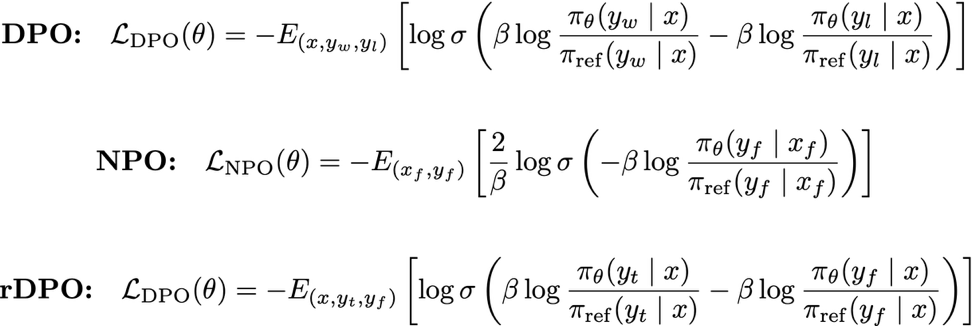
In this post, we introduce Reverse Direct Preference Optimization (rDPO), the novel unlearning technique behind Amazon Nova Customizable Content Moderation Settings (CCMS), and show how it reduces over-deflection while preserving model quality. We also provide pointers for customers who want to apply these preference optimization techniques to their own experiments.
The proliferation of powerful AI models necessitates advanced content moderation and bias mitigation techniques, making selective unlearning a timely development for practical deployment.
Sophisticated unlearning capabilities allow for greater control over AI model behavior, addressing concerns around harmful outputs, data privacy, and regulatory compliance, which are critical for enterprise adoption.
This advancement provides more granular control over what AI models 'know' or 'forget', enhancing their ethical deployment, customization for specific use cases, and responsible operation.
- · AWS customers
- · AI safety researchers
- · Enterprises deploying AI
- · Developers of AI moderation tools
- · Providers of less sophisticated content moderation
- · Companies with proprietary, rigid AI moderation
AI models can be more easily fine-tuned or de-biased without full retraining, reducing computational costs and time.
This capability could lead to new regulatory frameworks for 'right to be forgotten' within AI systems or ethical AI certification standards.
The ability to selectively unlearn might accelerate the development of personalized and highly adaptable AI, creating more tailored and safer user experiences but also potentially enabling more subtle forms of influence.
This signal links to a primary source. Continuum Brief monitors and indexes it as part of the live intelligence stream — we do not republish source content.
Read at AWS Machine Learning Blog