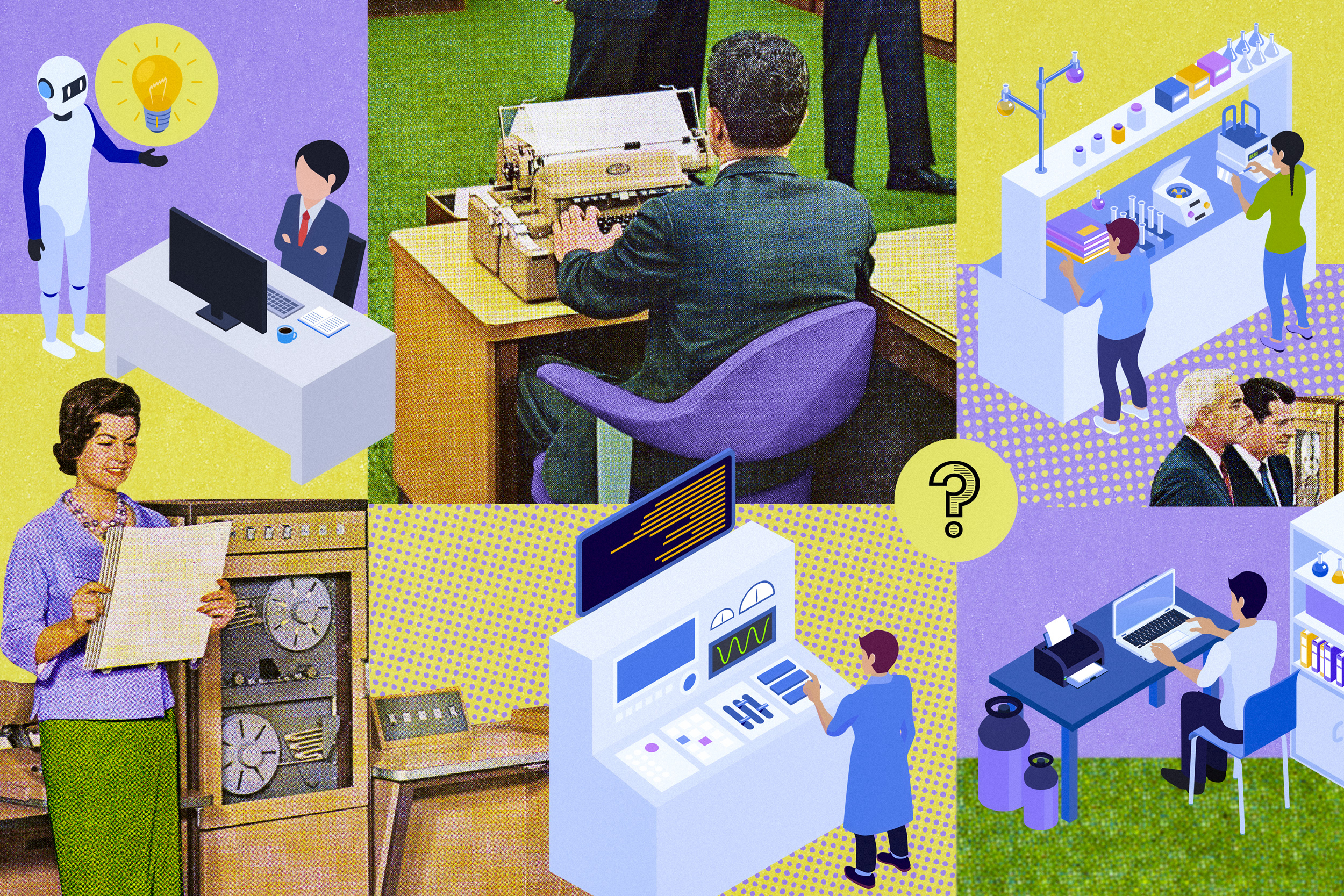
A new study of the postwar U.S. shows which kinds of workers historically filled new tech-enabled jobs.
The rapid advancement of AI and automation technologies is forcing a re-evaluation of historical precedents for technological job creation and destruction.
Understanding how AI impacts labor markets is crucial for policymakers, businesses, and individuals to prepare for significant workforce transformations and potential social dislocations.
The conventional wisdom that new technology always creates more jobs than it destroys, especially for younger, skilled workers, is being rigorously tested in the context of advanced AI.
- · AI developers and educators
- · Companies adopting AI for efficiency
- · Workers with adaptable skills
- · Workers in routine, automatable jobs
- · Education systems slow to adapt
- · Industries heavily reliant on predictable labor
AI-driven automation will displace certain job categories, requiring retraining and reskilling initiatives.
Increased pressure on social safety nets and educational institutions to manage workforce transitions could lead to new government programs or policy debates.
Long-term shifts in career paths and the very definition of 'work' could emerge, potentially altering societal structures and leisure time.
This signal links to a primary source. Continuum Brief monitors and indexes it as part of the live intelligence stream — we do not republish source content.
Read at MIT News — AI