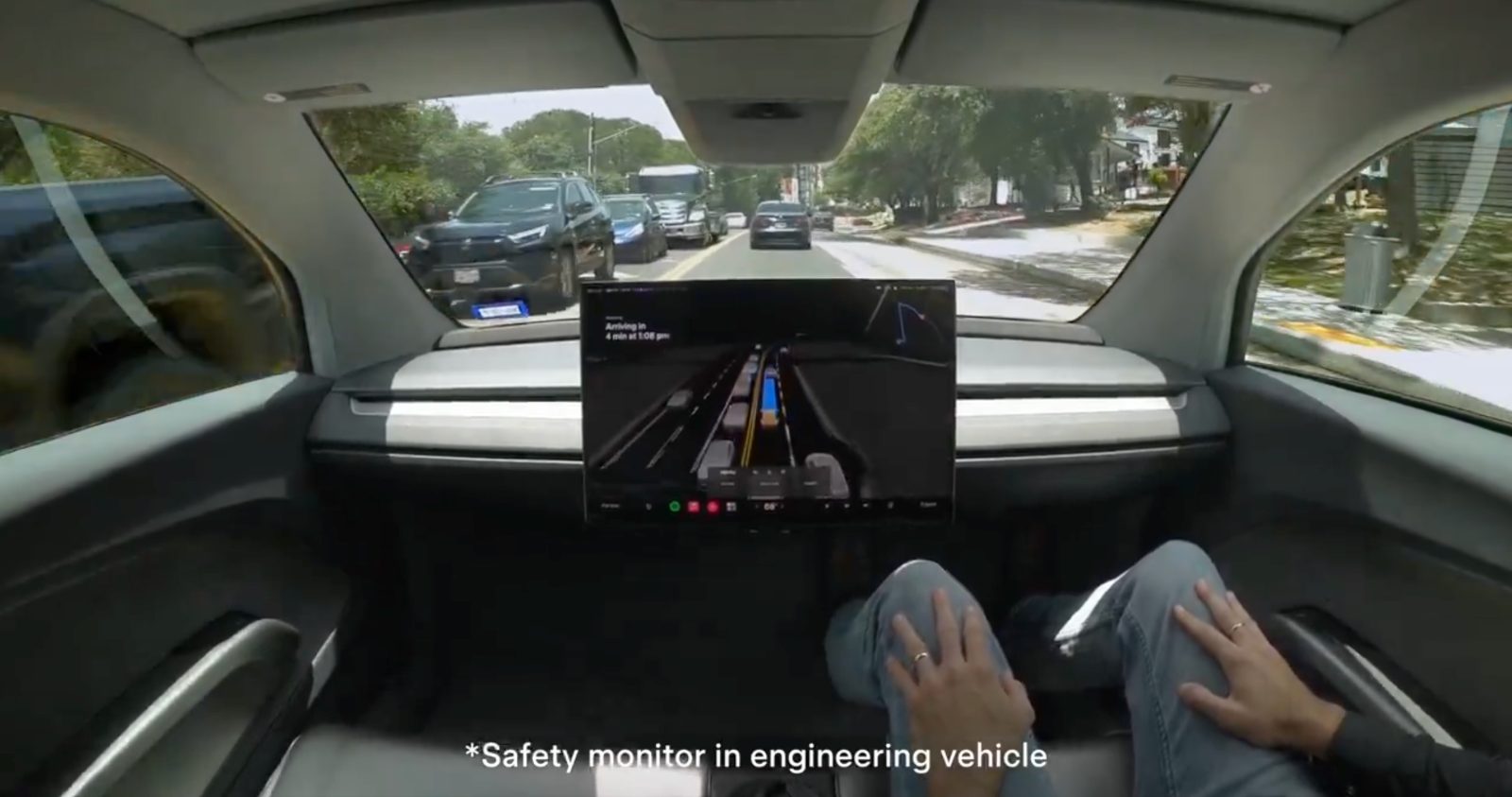
Tesla says it has started engineering tests of its first production Cybercab on public roads in Austin, marking the first time a customer-spec unit of the purpose-built robotaxi has been validated outside the factory. But a video shared by the company shows the two-seater driving with a supervisor sitting in the front passenger seat — a reminder that the car still isn’t operating on its own in Tesla’s paid service.
Tesla is pushing to validate its autonomous robotaxi technology on public roads, reflecting ongoing competitive pressures and development milestones in the autonomous vehicle sector.
This marks a tangible step towards commercial deployment of Tesla's purpose-built robotaxi, indicating progress in autonomous driving and potentially disrupting urban transportation.
The move from factory testing to public road engineering tests with a production unit signifies a maturation in Tesla's Cybercab development process, bringing it closer to consumer readiness.
- · Tesla
- · Autonomous vehicle technology companies
- · Early adopters of robotaxi services
- · Austin, TX (as a testing ground)
- · Traditional taxi and ride-sharing services
- · Human drivers (long term)
- · Companies with less advanced autonomous driving systems
Tesla accumulates real-world data and refines its Cybercab technology through public road testing.
Increased public and regulatory scrutiny on the safety and reliability of Tesla's autonomous systems will follow, impacting the broader AV industry.
Successful deployment could accelerate the transition to fully autonomous urban mobility, reducing car ownership and reshaping urban infrastructure.
This signal links to a primary source. Continuum Brief monitors and indexes it as part of the live intelligence stream — we do not republish source content.
Read at Electrek