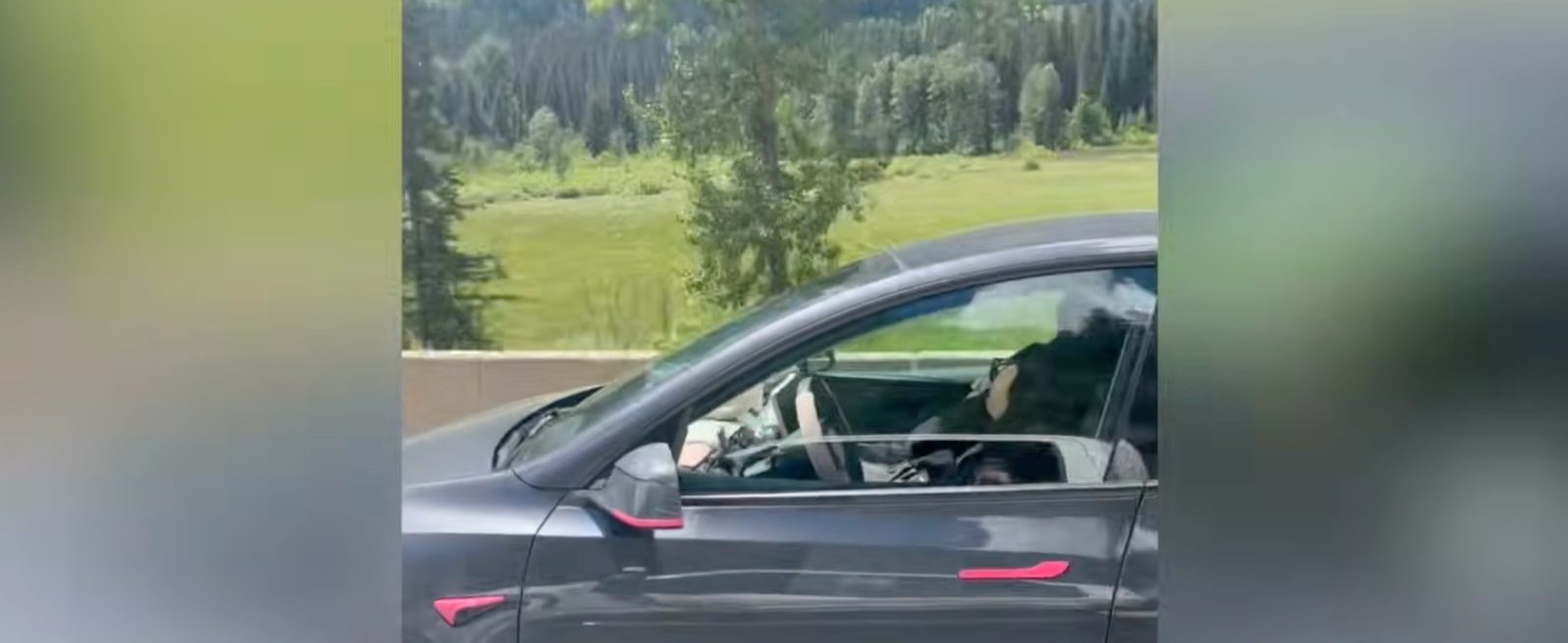
A Tesla driver was filmed apparently fast asleep behind the wheel at about 100 km/h on British Columbia’s Trans-Canada Highway on Sunday, with two sleeping children in the car. The obvious question is how Tesla’s driver monitoring — the very system meant to catch this — let it happen. The answer is that the driver was wearing large sunglasses, and that one detail exposes a real gap in how Tesla watches its drivers.
Rapid deployment of advanced driver-assistance systems (ADAS) is increasing, and public debate intensifies around their safety and actual capabilities, leading to more scrutiny of real-world incidents.
This incident highlights critical limitations in current ADAS driver monitoring, underscoring that technology, even when advanced, has exploitable vulnerabilities that pose significant public safety risks if not addressed.
Expect increased regulatory pressure on autonomous system providers to enhance driver monitoring reliability, potentially leading to immediate system updates or stricter operating conditions for ADAS features.
- · ADAS sensor manufacturers
- · Regulatory bodies
- · Public safety advocacy groups
- · Tesla's Autopilot/FSD reputation
- · Early ADAS adopters
- · Car insurance companies
Immediate backlash and calls for stronger regulations on ADAS feature safety and driver monitoring effectiveness.
Other autonomous vehicle developers may face intensified scrutiny and pressure to demonstrate robust driver monitoring far beyond current standards.
Potential for a bifurcated market between highly supervised ADAS and fully autonomous systems, with a longer, more cautious path to truly unsupervised operation.
This signal links to a primary source. Continuum Brief monitors and indexes it as part of the live intelligence stream — we do not republish source content.
Read at Electrek