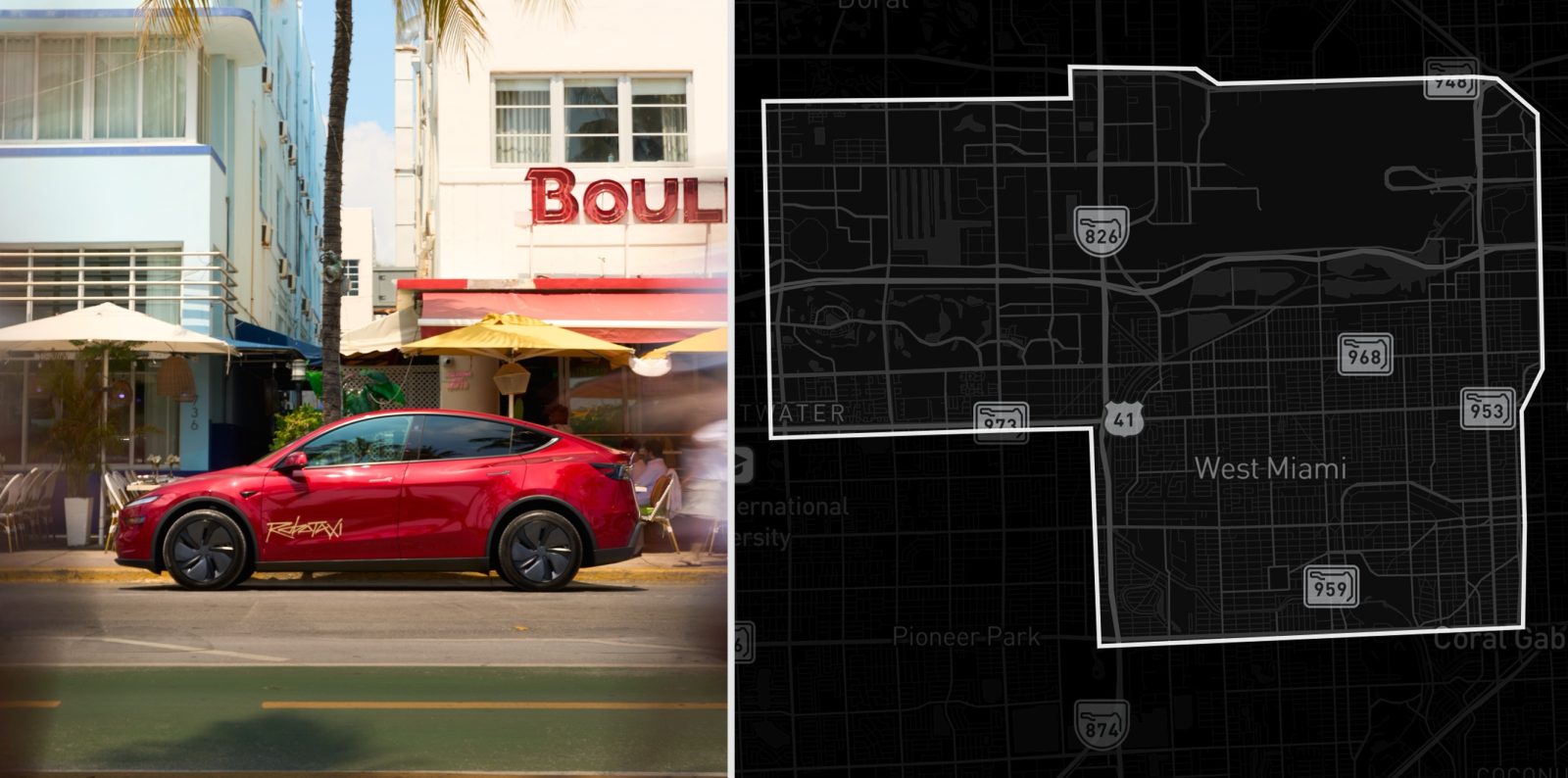
Tesla has mapped out a Robotaxi service area in Miami, publishing a geofence that covers only a small slice of the metro — mostly West Miami and a strip stretching toward Doral and Sweetwater. It’s the latest city Tesla has drawn a box around, but the announcement lands with a thud when you consider what’s happened in Texas over the past year.
The announcement comes as Tesla faces pressure to demonstrate progress on its Robotaxi ambitions, despite ongoing challenges in scaling its autonomous driving technology.
This event indicates the iterative, geographically constrained approach companies are taking to deploy autonomous vehicle technology, highlighting the practical difficulties of mass adoption.
The perceived timeline for widespread robotaxi deployment becomes more segmented and localized, rather than a rapid, broad rollout across major metros.
- · Localized autonomous vehicle service providers
- · Cities with supportive regulatory environments
- · Companies over-promising broad robotaxi deployment
- · Traditional taxi services in limited geofenced areas
Tesla begins limited revenue generation from a contained robotaxi service in Miami.
Other autonomous vehicle developers may follow a similar incremental, geofenced deployment strategy, focusing on specific high-value zones.
The staggered deployment of robotaxis in 'tiny zones' could lead to a patchwork of autonomous and human-driven transportation within cities for an extended period, creating new regulatory and logistical challenges.
This signal links to a primary source. Continuum Brief monitors and indexes it as part of the live intelligence stream — we do not republish source content.
Read at Electrek