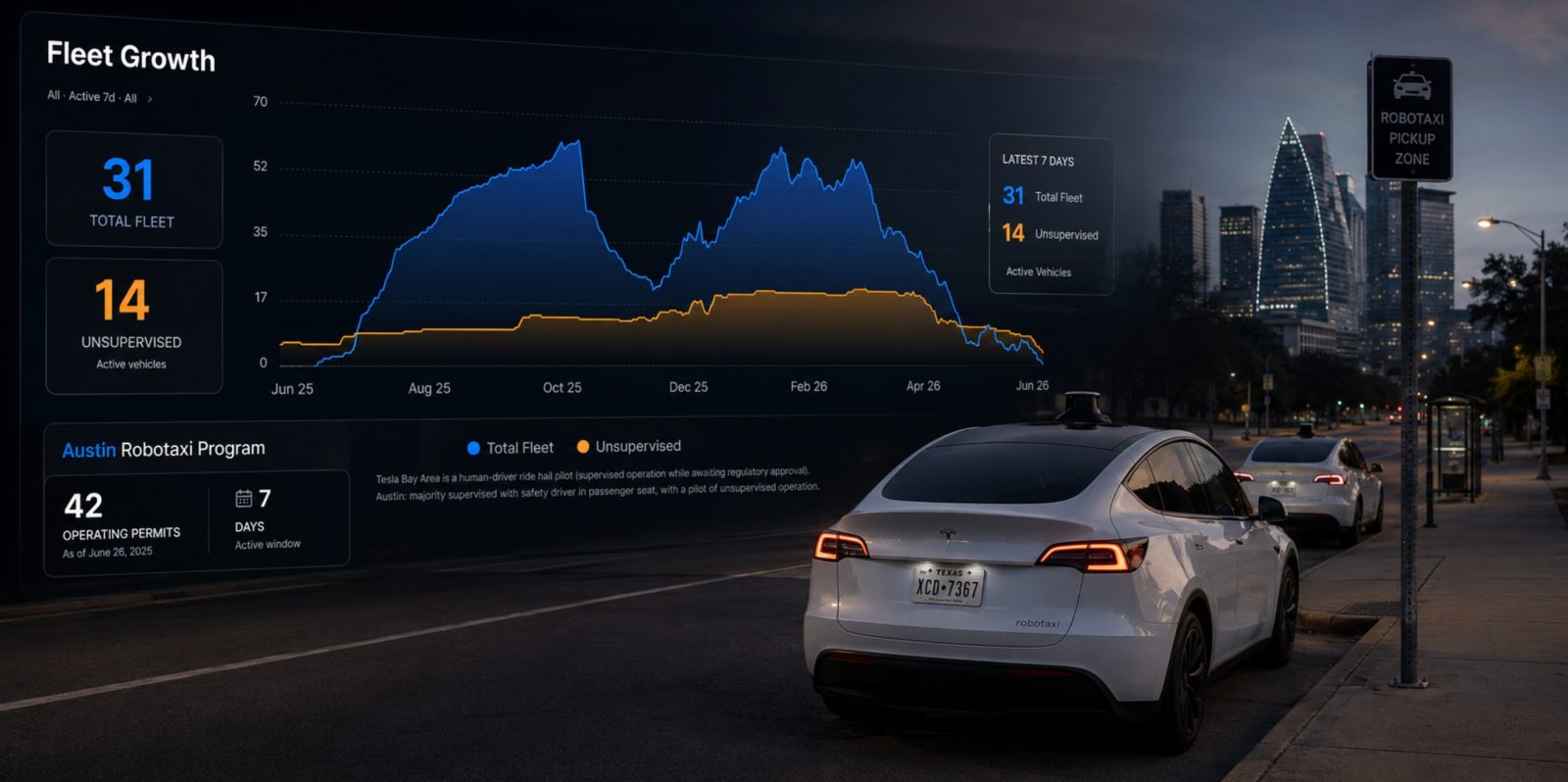
Tesla didn’t report a single at-fault “Robotaxi” crash in the latest NHTSA autonomous-vehicle data — its only fresh incident was a Model Y getting rear-ended while stopped, clearly the other driver’s fault. That sounds like good news for Tesla’s safety record. But live fleet data points to the real reason the crashes have dried up: Tesla’s robotaxis are barely running, and the active fleet is shrinking a year into the program.
This report surfaces a year into Tesla's 'robotaxi' program, offering a data-backed assessment of its operational scale and safety claims at a critical juncture for autonomous vehicle development.
This challenges the perception of a leading autonomous vehicle developer's progress, highlighting the significant gap between marketing and deployable reality for fully autonomous systems.
The narrative around Tesla's robotaxi ambitions shifts from imminent disruption to developmental struggle, impacting investor confidence and competitive dynamics in the autonomous vehicle sector.
- · Waymo
- · Traditional automakers investing in phased autonomy
- · NHTSA (data reliability)
- · Tesla
- · Tesla investors (specifically on robotaxi thesis)
- · Ambitious L4 autonomous vehicle timelines
Tesla's stock may face pressure as the viability of its 'robotaxi' business model is questioned by real-world fleet data.
Regulators may increase scrutiny on other autonomous vehicle claims, demanding more transparent operational data before widespread deployment approvals.
The broader public perception of autonomous vehicle readiness could sour, leading to slower adoption rates for future L4/L5 technologies from all developers.
This signal links to a primary source. Continuum Brief monitors and indexes it as part of the live intelligence stream — we do not republish source content.
Read at Electrek