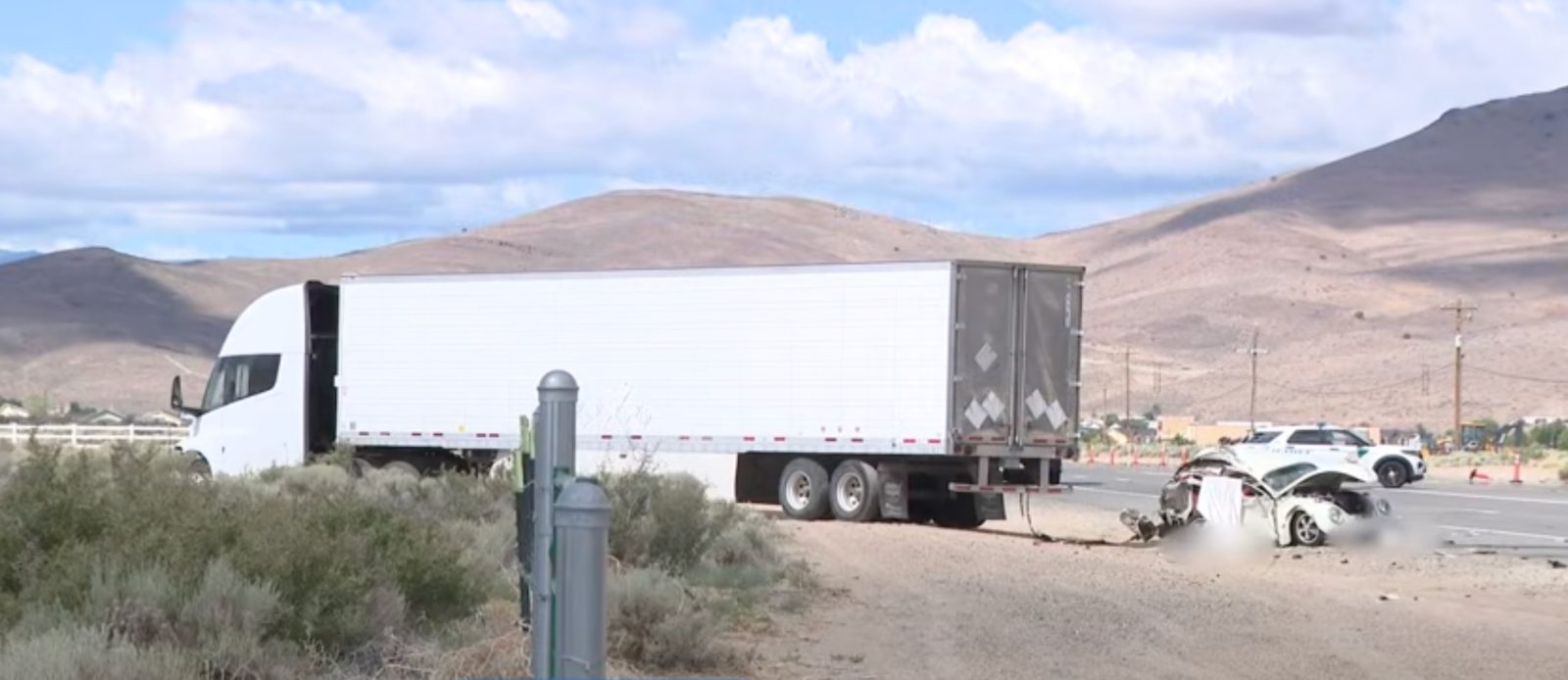
A Tesla Semi was involved in its first known fatal crash, killing two people on U.S. 50 in Nevada on Sunday morning. The driver of the Class 8 electric truck reportedly fell asleep before rear-ending two passenger vehicles stopped at a red light, according to preliminary statements from investigators.
The deployment of sophisticated autonomous or semi-autonomous vehicles like the Tesla Semi is increasing, making incidents, both fatal and non-fatal, more probable as testing moves into real-world commercial operations.
This event directly impacts public perception, regulatory scrutiny, and the technological development trajectory of autonomous and electric heavy-duty vehicles, potentially influencing their adoption timelines.
The incident introduces increased pressure on Tesla and other autonomous vehicle developers to demonstrate safety, and may lead to enhanced regulatory oversight or revised operational procedures for human-supervised autonomous systems.
- · Traditional trucking companies (short-term)
- · Safety technology developers
- · Regulators
- · Tesla
- · Autonomous trucking sector
- · EV heavy-duty vehicle adoption
Increased scrutiny and potential delays in the widespread adoption of semi-autonomous and autonomous heavy-duty vehicles.
Heightened public skepticism regarding the safety of AI-driven transportation, impacting investment and policy decisions.
A push for more robust human oversight systems or a re-evaluation of current 'L2/L3' autonomous classifications in commercial applications.
This signal links to a primary source. Continuum Brief monitors and indexes it as part of the live intelligence stream — we do not republish source content.
Read at Electrek