Tesla Starts Testing Steering Wheel-Free Cybercab On Austin Streets. Can It Match Waymo?
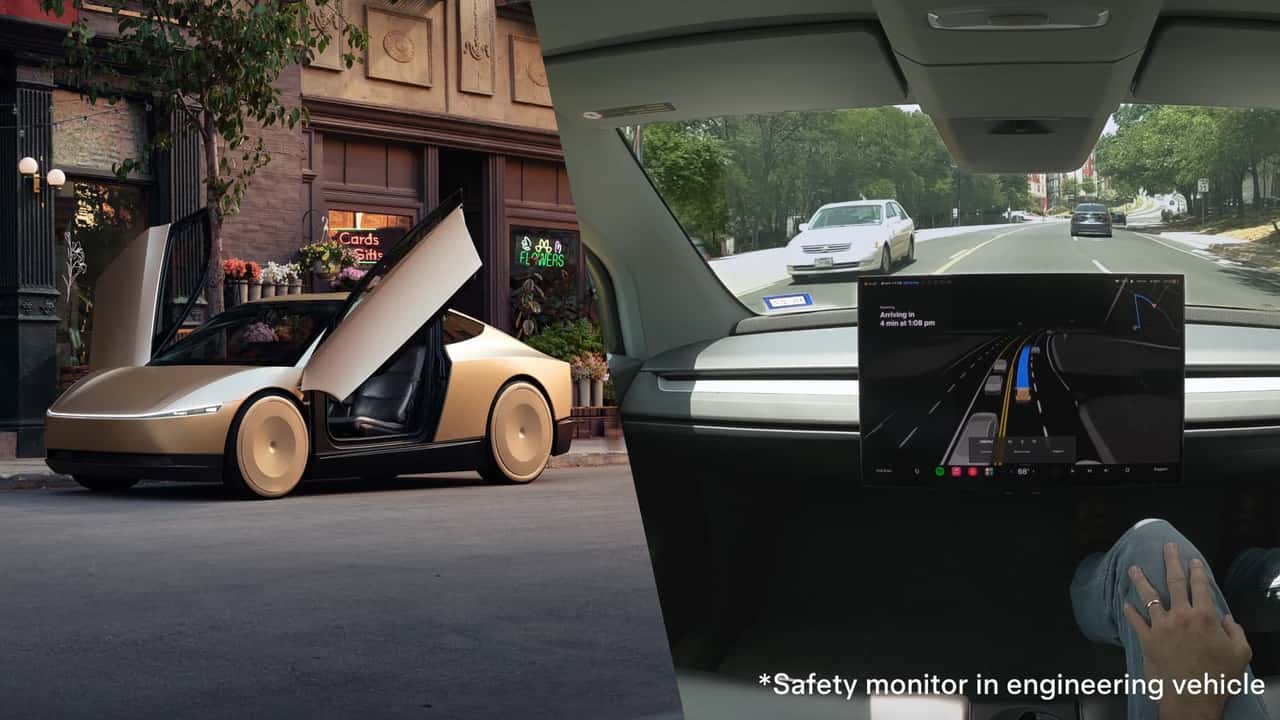
Tesla wants to sell Cybercabs without steering wheels to the general public. Will it work?
Autonomy is advancing rapidly, driven by AI and computational power, leading companies to push for commercial applications like robotaxis to recoup heavy R&D investments.
This move by Tesla indicates a direct challenge to established autonomous vehicle leaders and accelerates the public's exposure to and potential adoption of fully driverless transportation.
The competition in the autonomous taxi market intensifies with a major new player potentially bypassing traditional vehicle controls, pushing towards a future where personal car ownership may be redefined.
- · Tesla
- · Autonomous vehicle sensor manufacturers
- · AI compute providers
- · Early adopter cities
- · Traditional taxi services
- · Human drivers (long term)
- · Competitors without steering wheel-free solutions
Increased public and regulatory scrutiny on the safety and reliability of fully autonomous, steering wheel-free vehicles.
Accelerated development and deployment of autonomous fleets by other major players to maintain competitiveness in mobility services.
Urban planning adapts to accommodate widespread autonomous vehicle networks, potentially reducing the need for parking and reconfiguring public transit systems.
This signal links to a primary source. Continuum Brief monitors and indexes it as part of the live intelligence stream — we do not republish source content.
Read at InsideEVs