Teslas Will Now Deploy Their Airbags Before Crashes Happen Thanks To Cameras
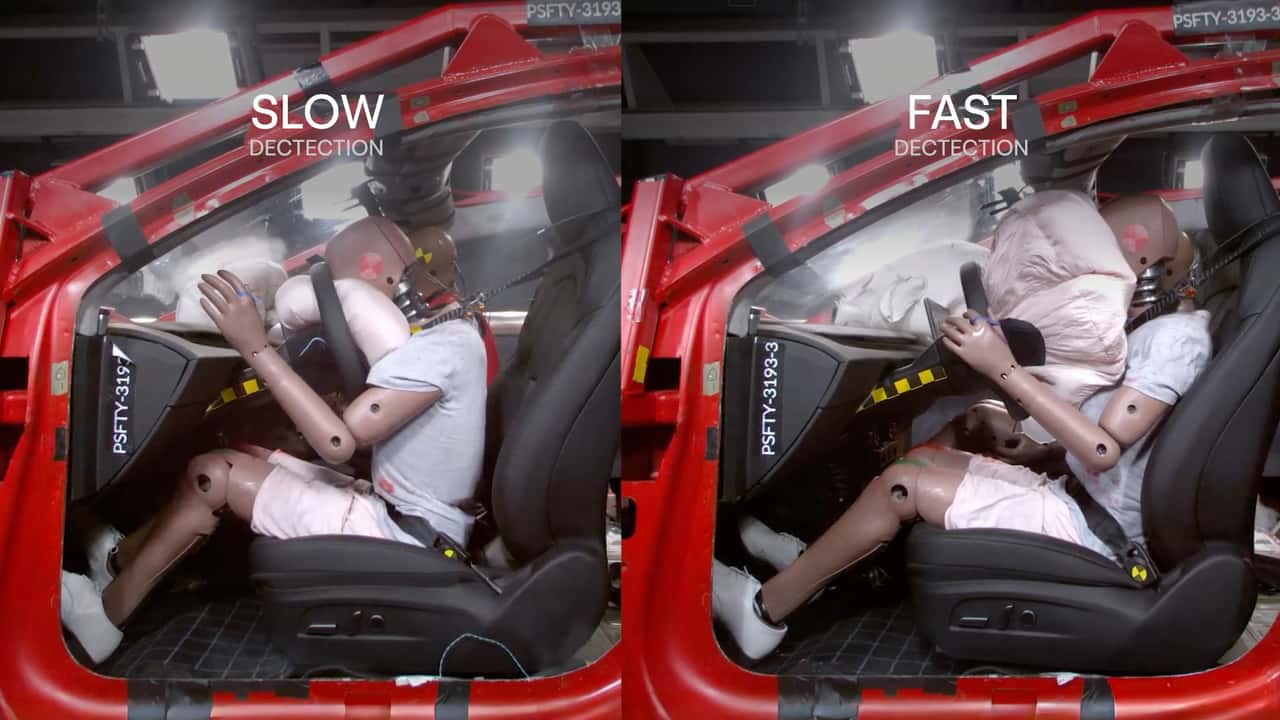
The manufacturer says its cameras can now help the restraint system react sooner when a collision becomes unavoidable.
This development leverages advancements in camera vision and real-time processing, technologies that have matured significantly in recent years for automotive applications.
This represents a crucial safety improvement for autonomous and non-autonomous vehicles, potentially reducing severe injuries and fatalities in collisions by enabling proactive safety responses.
Vehicle safety systems are moving from purely reactive post-impact measures to proactive, pre-impact interventions, increasing occupant protection before a crash fully materialises.
- · Tesla
- · Automotive safety systems manufacturers
- · Insurance companies (due to reduced claims)
- · Consumers
- · Companies relying on older, purely reactive safety systems
- · Traditional airbag sensor manufacturers
Immediate reduction in crash-related injuries due to earlier airbag deployment.
Increased consumer trust and adoption of advanced driver-assistance systems and potentially fully autonomous vehicles.
Pressure on other automotive manufacturers to integrate similar pre-collision safety technologies, raising the industry standard for vehicle safety.
This signal links to a primary source. Continuum Brief monitors and indexes it as part of the live intelligence stream — we do not republish source content.
Read at InsideEVs