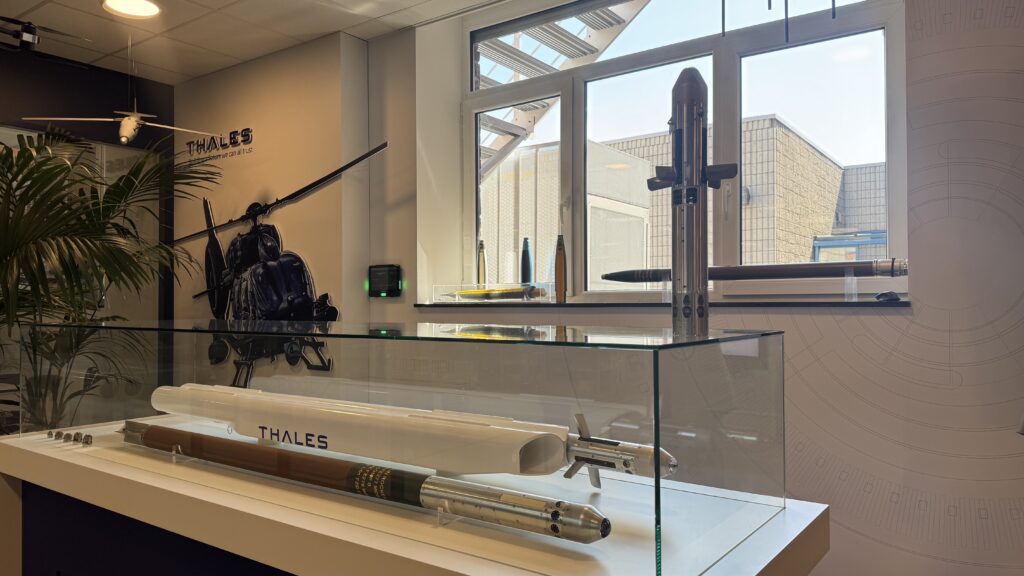
“We have integrated a new sensor behind the guidance kit, which is activated when it gets closer to the target,” one Thales Belgium official told Breaking Defense.
The proliferation of drones in modern warfare, particularly in conflicts like the Middle East, is driving rapid innovation in counter-drone technologies, making this upgrade critical for maintaining defense capabilities.
This development signifies a crucial advancement in short-range air defense, enhancing the precision and effectiveness of guided rockets against agile drone threats, thereby shifting tactical advantages.
Thales's laser-guided rockets now possess a significantly improved ability to autonomously track and neutralize drones, reducing collateral damage and increasing mission success rates against proliferating aerial threats.
- · Thales
- · European defense sectors
- · Forces combating drone threats
- · Drone manufacturers without advanced counter-measures
- · Low-tech drone operators
Improved counter-drone capabilities will force adversaries to develop more sophisticated or swarming drone tactics.
This could accelerate a broader arms race in drone and counter-drone technologies, particularly in regions with active conflicts.
The enhanced lethality of guided rockets against drones may influence future battlefield doctrine regarding air superiority and close-air support.
This signal links to a primary source. Continuum Brief monitors and indexes it as part of the live intelligence stream — we do not republish source content.
Read at Breaking Defense