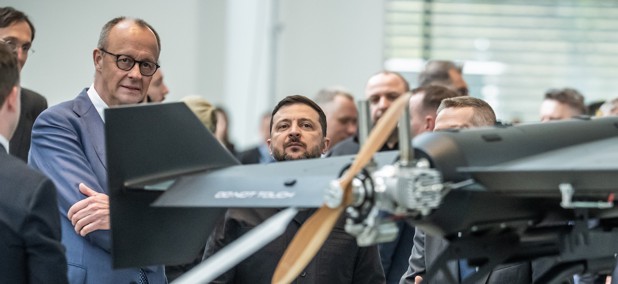
Uncrewed and autonomous systems—and the willingness to adapt to them—have neutered Russian advantages.
The proliferation of uncrewed and autonomous systems has reached a critical mass where their aggregate impact is transforming the battlefield dynamics in a major conventional conflict.
This development signals a profound shift in military doctrine and procurement, demonstrating that technological adaptation can overcome traditional numerical or material advantages in modern warfare.
The perceived viability of smaller, technologically advanced forces against larger, more traditional adversaries is now fundamentally altered, prioritizing agility and innovation over sheer scale.
- · Defence Tech start-ups
- · Ukraine
- · Developers of AI/autonomy solutions
- · Western defence industrial base
- · Russia
- · Traditional large-scale military hardware manufacturers
- · States reliant on legacy military doctrines
Nations globally will accelerate investments in autonomous military systems and associated R&D.
There will be a re-evaluation of military budgets and procurement strategies, shifting away from crewed platforms.
The concept of offensive and defensive capabilities will be redefined, potentially leading to new arms control challenges for autonomous weapons.
This signal links to a primary source. Continuum Brief monitors and indexes it as part of the live intelligence stream — we do not republish source content.
Read at Defense One