The bifurcated laptop landscape of Computex 2026 – MacBook Neo competitors with 8GB of RAM, and expensive Nvidia laptops promising an agentic-focused future of Windows on Arm
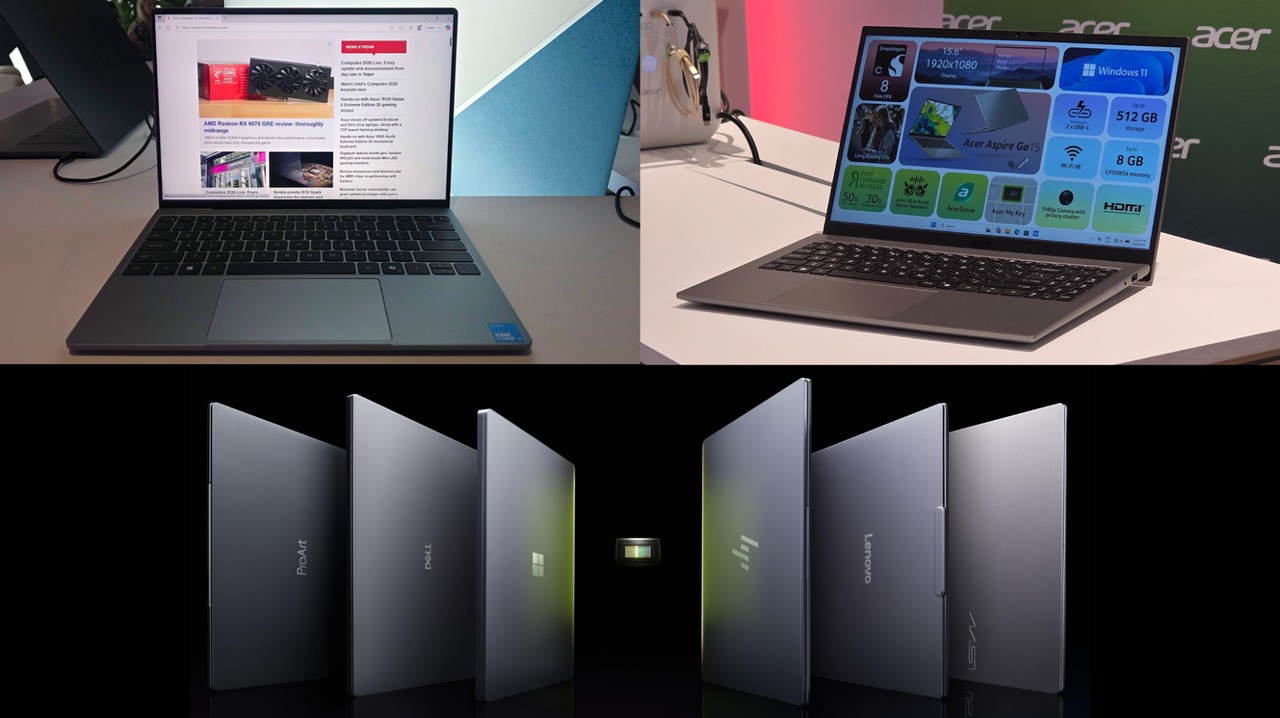
With no new GPUs or major mobile CPU platform launches surrounding the show, the laptop announcements at Computex this year fell into two disparate categories, appealing to users with very different budgets.
The Computex 2026 event provides a snapshot of the current state and near-future direction of the laptop market, particularly reflecting the ongoing convergence of AI capabilities and hardware development.
This bifurcation highlights divergent strategies in the laptop market, with one segment focusing on accessible MacBook competition and another on high-end AI-centric Windows on Arm, indicating future market segmentation and technological competition.
The market is increasingly divided into budget-conscious, MacBook-competitive devices and premium, AI agent-focused Windows on Arm laptops, suggesting a strategic repositioning by manufacturers.
- · Nvidia
- · Qualcomm (Arm ecosystem)
- · Microsoft (Windows on Arm)
- · Consumers seeking budget-friendly laptops
- · Intel (traditional x86 dominance)
- · AMD (traditional x86 dominance)
- · Legacy software developers (non-optimized for Arm)
The laptop market segments more distinctly based on price, performance, and AI integration, with Arm-based systems gaining significant traction in the premium AI category.
Increased competition could drive innovation and price reductions in both high-end AI laptops and budget-friendly devices, benefiting consumers but pressuring traditional PC vendors.
The success of Windows on Arm could accelerate a broader platform shift away from x86 dominant architectures in personal computing, impacting software ecosystems and developer priorities.
This signal links to a primary source. Continuum Brief monitors and indexes it as part of the live intelligence stream — we do not republish source content.
Read at Tom's Hardware