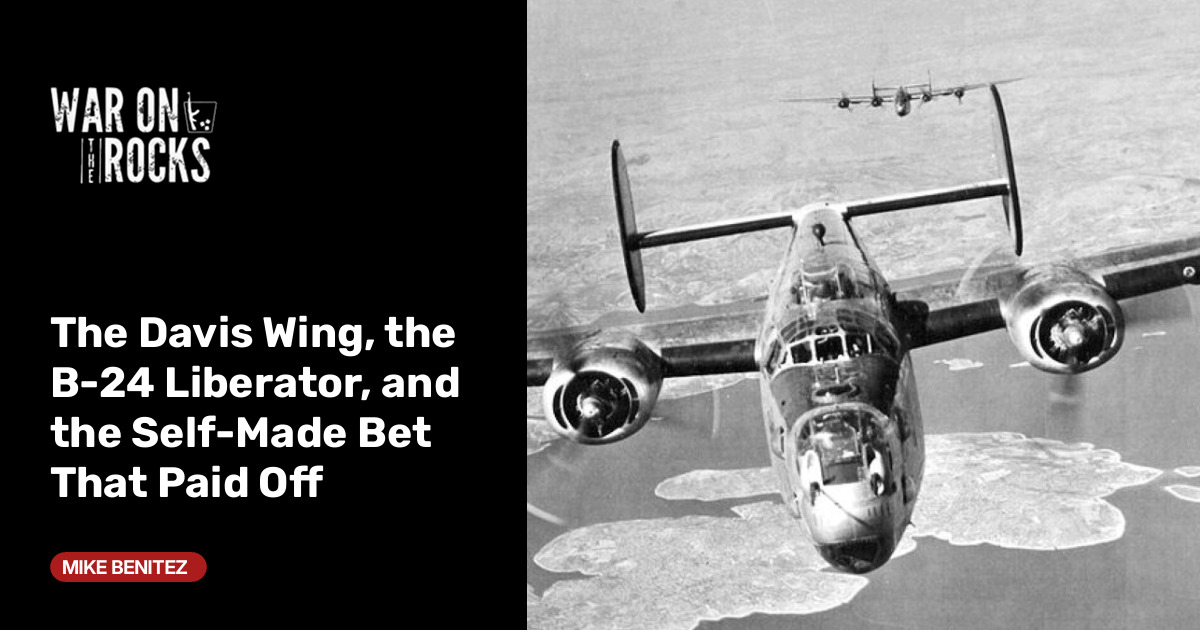
The most produced American military aircraft of World War II was not a small fighter, a trainer, or a simple utility airplane — it was a complex four-engine heavy bomber called the B-24 Liberator. Over the course of five years, American industry produced a staggering 18,482 of these bombers, and they served in every theater of the war.The B-24 was a workhorse with strategic impact, but it would not have had its utility — or possibly even existed — were it not for its wing.Of course, all airplanes need a wing to fly. But the B-24 Liberator’s wing was special: The post The Davis Wing, the B-24 L
The article uses the historical example of the B-24 Liberator's innovative wing to highlight the importance of defence innovation, connecting it to current discussions around modern defence recapitalisation efforts.
A strategic reader should care because it illustrates how specific technological innovations can profoundly impact military capabilities and industrial production, offering lessons for contemporary defence tech strategies.
This article doesn't change current events directly, but it contextualizes the historical precedent for rapid defence industrial scaling and specific technological breakthroughs.
- · Defence innovators
- · Aircraft component manufacturers
- · Airborne military platforms
- · N/A
The article emphasizes the critical role of specific technological features, like the Davis Wing, in creating highly effective military assets.
This historical example could inspire or inform modern defence tech investments, pushing for specific, high-impact innovations in current platforms.
A renewed focus on fundamental design innovation over incremental improvements could shape future procurement and R&D strategies in defence sectors.
This signal links to a primary source. Continuum Brief monitors and indexes it as part of the live intelligence stream — we do not republish source content.
Read at War on the Rocks