The future of defense manufacturing will be distributed, autonomous and software-defined
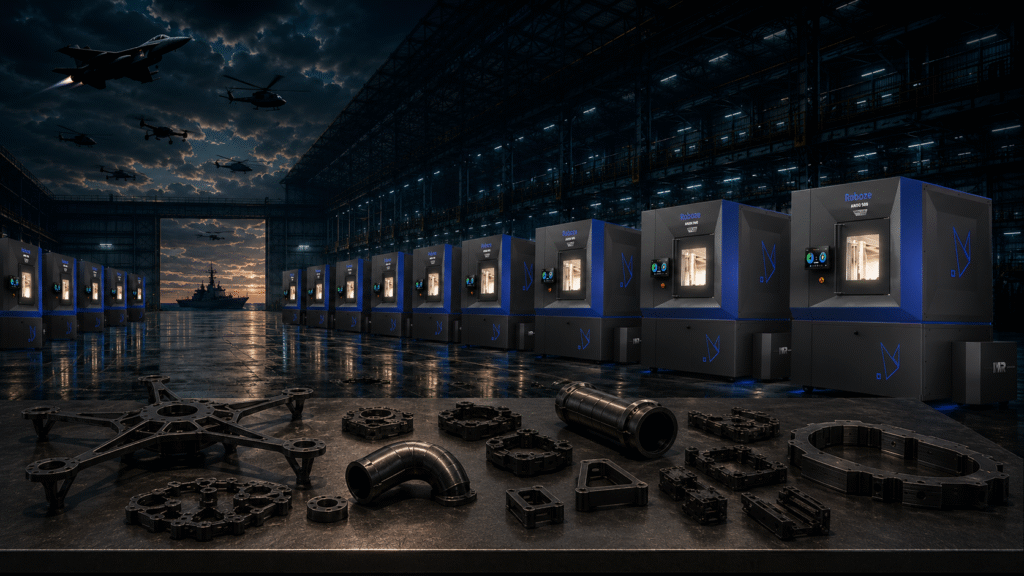
[Sponsored] How Roboze is helping transform additive manufacturing from a prototyping tool into production infrastructure for defense and critical industries.
The increasing geopolitical instability and a renewed focus on industrial resilience are driving the adoption of advanced manufacturing techniques like distributed and additive manufacturing in defense.
This shift signifies a fundamental change in how defense equipment is produced, moving towards more agile, decentralized, and resilient supply chains less vulnerable to traditional disruptions.
Defense manufacturing is transitioning from centralized, slow processes to distributed, software-defined, and autonomous production, enabling faster iteration and customization of military hardware.
- · Additive manufacturing companies
- · Defense technology integrators
- · Nations with advanced manufacturing capabilities
- · Software-defined manufacturing platforms
- · Traditional defense prime contractors (slow to adapt)
- · Legacy manufacturing processes
- · Centralized defense supply chain operators
Increased pace of defense innovation and faster deployment of new military capabilities.
Reduced dependence on long, vulnerable supply chains and a greater emphasis on localized production.
Potential for smaller nations to develop more advanced defense capabilities independently, altering global power dynamics.
This signal links to a primary source. Continuum Brief monitors and indexes it as part of the live intelligence stream — we do not republish source content.
Read at Breaking Defense