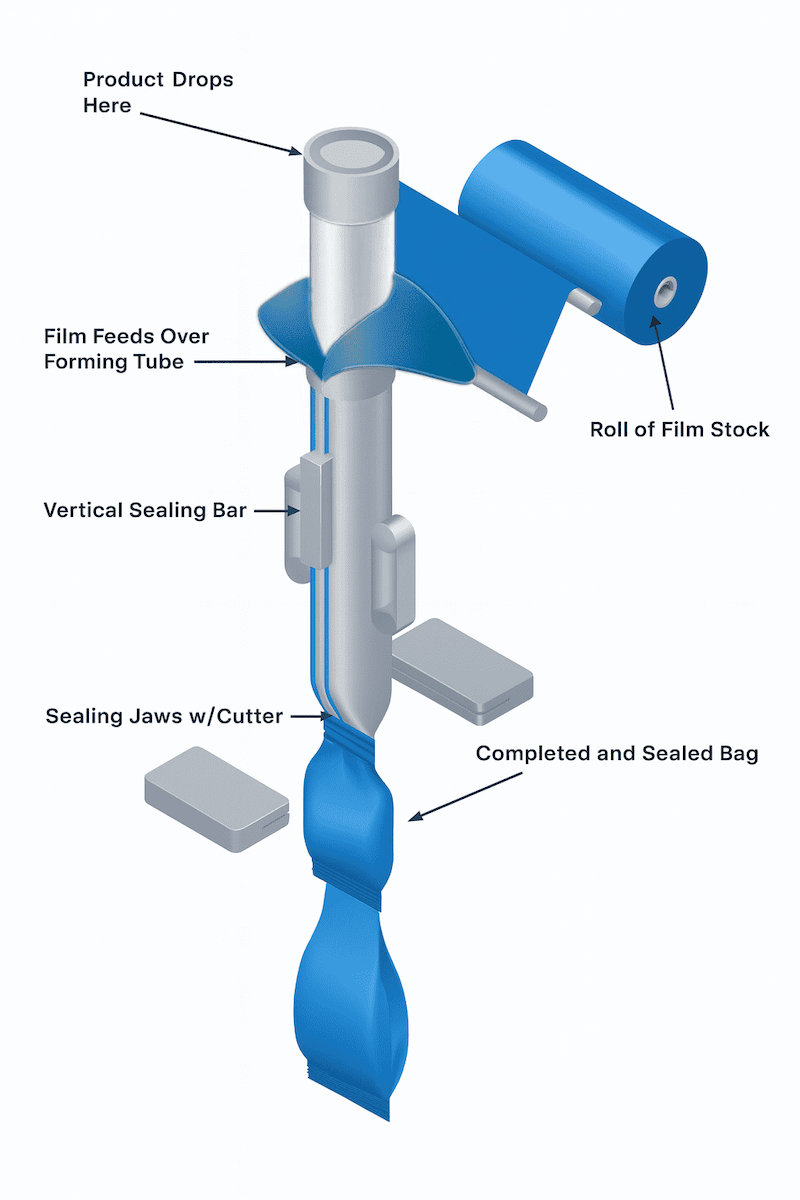
The packaging industry is undergoing a profound transformation. As consumer demands intensify and production timelines shrink, manufacturers across every sector are turning to smarter, faster, and more efficient solutions. At the heart of this revolution is VFFS technology, a system that has quietly become one of the most essential tools in modern packaging facilities. Vertical […]
Consumer demands for packaged goods are intensifying, pushing manufacturers to adopt more efficient and faster packaging solutions, exemplified by advancements in VFFS technology.
The widespread adoption of advanced packaging automation impacts supply chain efficiency, operational costs for manufacturers, and the speed at which products can reach markets, especially within consumer packaged goods.
Previously labor-intensive or slower packaging processes are being rapidly automated and optimized, reducing human involvement and increasing throughput in industrial settings.
- · Industrial automation companies
- · Packaging machinery manufacturers
- · Consumer packaged goods companies
- · Logistics and supply chain sector
- · Manual packaging labor
- · Legacy packaging equipment manufacturers
- · Markets reliant on low-efficiency production
Increased efficiency and reduced operational costs for manufacturers adopting advanced VFFS technology.
Potential for increased global trade and faster market penetration for products due to streamlined packaging and distribution.
Long-term shifts in labor markets as automation reduces demand for certain types of manual work in packaging, potentially leading to retraining initiatives.
This signal links to a primary source. Continuum Brief monitors and indexes it as part of the live intelligence stream — we do not republish source content.
Read at Robotics & Automation News