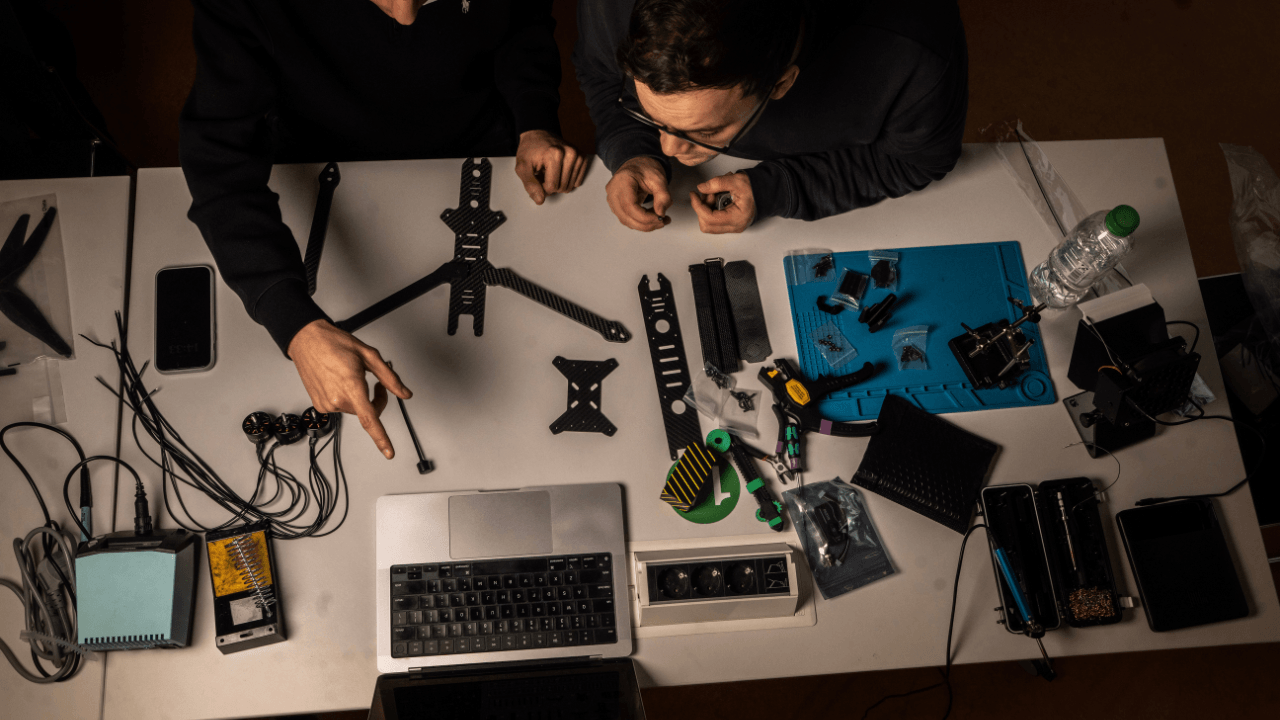
Here in Europe, a new generation of defence startups is emerging far outside the traditional military-industrial complex. Across weekend hackathons, engineers, software developers, drone builders, res...
The ongoing geopolitical instability and conflicts, particularly in Eastern Europe, have highlighted deficiencies in traditional military supply chains and spurred innovation in defencetech outside established contractors.
This development indicates a democratisation and decentralisation of defence innovation, potentially leading to faster development cycles and more agile responses to emerging threats, impacting national security and industrial policy.
Defence technology development is shifting from a solely top-down, state-led process to one involving a broader ecosystem of startups and engineers, accelerating the integration of new technologies like drones and AI.
- · Defencetech startups
- · European defence industrial base
- · Governments seeking rapid innovation
- · Software engineers and drone builders
- · Traditional defence prime contractors (if they fail to adapt)
- · Bureaucratic procurement processes
- · Nations reliant on legacy defence systems
Increased availability of modular, rapidly deployable defence technologies for European nations.
Greater competition and innovation culture within the broader defence sector, potentially lowering costs and increasing effectiveness.
A potential shift in global military power dynamics as smaller nations gain access to advanced, non-traditional defence capabilities.
This signal links to a primary source. Continuum Brief monitors and indexes it as part of the live intelligence stream — we do not republish source content.
Read at Tech.eu