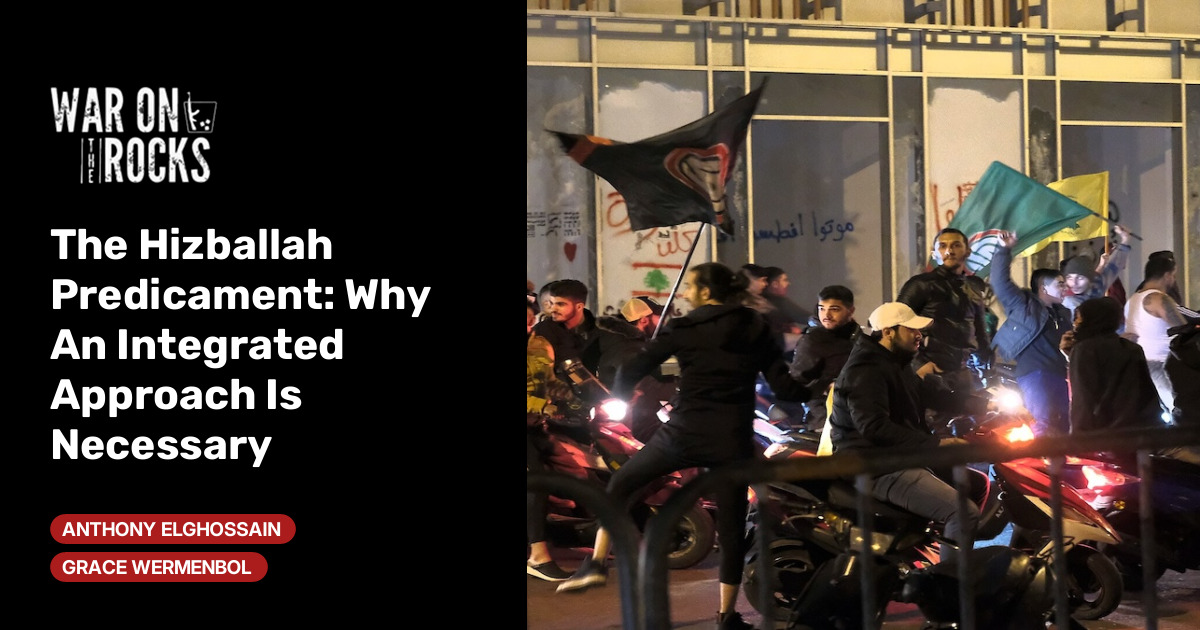
What can leaders do about a transnational organization that is a militia, a political party, a social services network, and a smuggling operation at the same time — and one that has resisted various dialogues and survived repeated attacks?American, Lebanese, and other leaders should recognize Hizballah’s hybrid, transnational nature and grapple with the unique challenges the organization creates. Otherwise, they will fail to resolve the Hizballah predicament while creating conditions for ineffective agreements, new wars, and squandered opportunities in the Levant.Meeting openly for the first t
The perennial challenge posed by hybrid non-state actors like Hizballah, especially in volatile regions, demands renewed strategic consideration as conflicts persist and evolve.
This analysis highlights the need for integrated, multi-faceted approaches to effectively manage complex geopolitical threats, moving beyond purely military or diplomatic solutions.
The recommendation shifts the focus from siloed responses to a comprehensive understanding of hybrid organizations, influencing policy discussions for future engagements.
- · Integrated policy frameworks
- · Diplomacy and intelligence sectors
- · Unilateral military interventions
- · Fragmented international efforts
International actors might develop more sophisticated frameworks for engaging with hybrid non-state entities.
Increased security cooperation could emerge between nations facing similar complex threats.
Long-term stability in regions like the Levant could improve if comprehensive strategies are successfully implemented.
This signal links to a primary source. Continuum Brief monitors and indexes it as part of the live intelligence stream — we do not republish source content.
Read at War on the Rocks