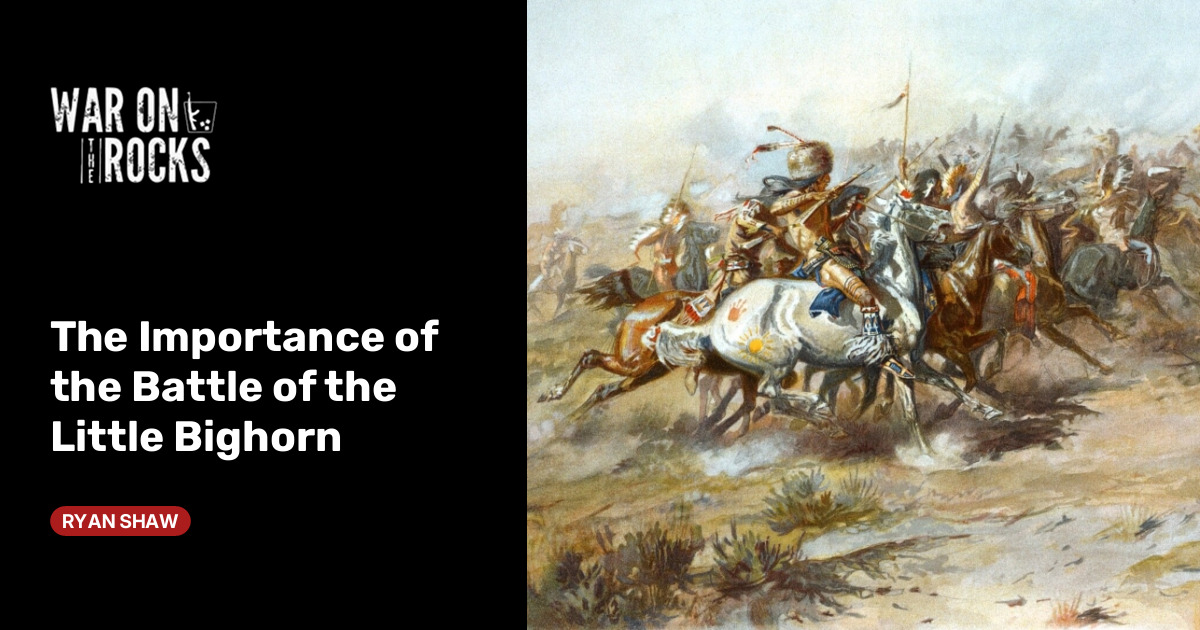
On June 25, 1876, Lt. Col. George Armstrong Custer and an entire battalion of the 7th Cavalry Regiment rode to their deaths and into American legend on the ridges north of Montana’s Little Bighorn River. The battle was decided in a few hours. Its meaning remains contested 150 years later.Little Bighorn stands alongside Yorktown, Gettysburg, and D-Day in the pantheon of iconic American battles. But it is a curious addition there, in that it was a small engagement, fought by just a few hundred men on a compact piece of terrain. More curiously still, it was a loss. Not just The post The Importanc
The article is a historical commentary commemorating the 150th anniversary of the Battle of the Little Bighorn.
It provides a historical perspective on warfare and national memory, but does not present new data relevant to current strategic shifts.
Nothing about this historical review changes the current strategic landscape or any underlying conditions.
The article prompts reflection on historical military engagements and their interpretation.
It reminds readers of the enduring human element in conflict despite technological advancements.
Could indirectly encourage deeper study into military history and its lessons for contemporary strategy.
This signal links to a primary source. Continuum Brief monitors and indexes it as part of the live intelligence stream — we do not republish source content.
Read at War on the Rocks