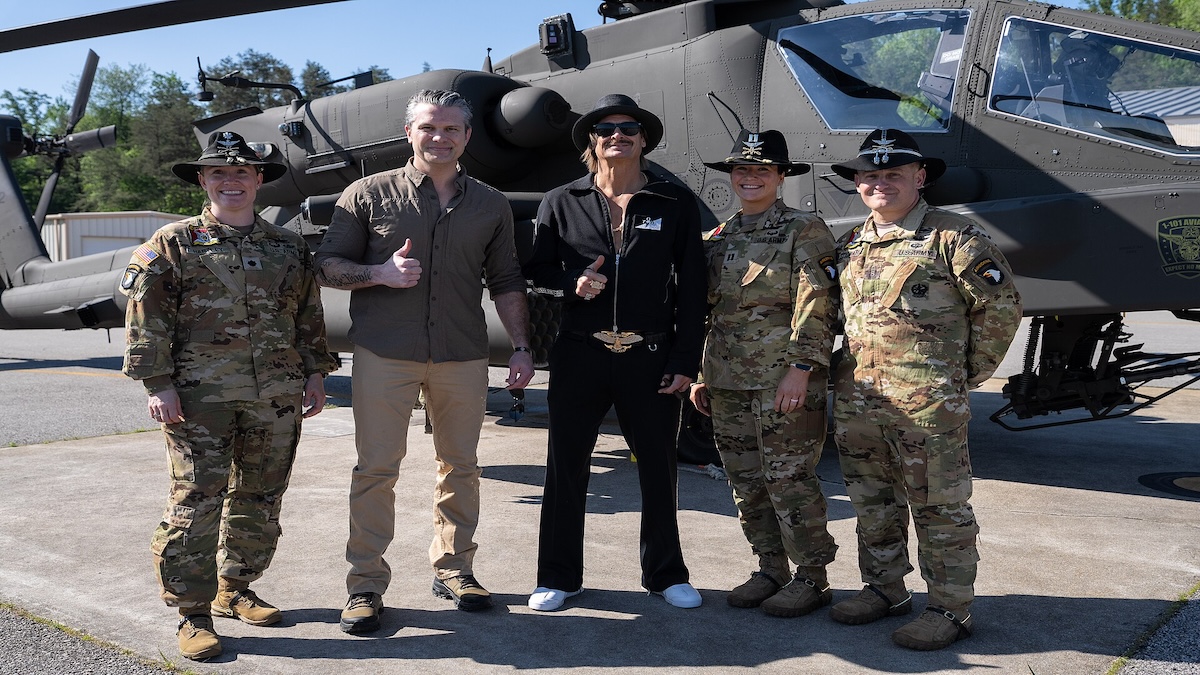
During Congressional testimony from Department of Defense leadership last week, Representative George Whitesides asked Secretary of Defense Pete Hegseth, “How does canceling a command-initiated review support a culture of accountability?” But before the secretary could answer, Whitesides instead decided to direct the question to the chairman of the Joint Chiefs of Staff, Gen. Dan Caine. Clearly uncomfortable with the question, Caine replied, “What you are alluding to … is a partisan question.” The exchange occupied only a few minutes amid days of acrimonious testimony focused primarily on the
The increased public scrutiny and politicization of military affairs, exemplified by the 'Kid Rock Flyby Controversy,' highlight a growing tension between political discourse and military professionalism.
This event signals a continued erosion of trust and respect in civil-military relations, potentially impacting military autonomy, effectiveness, and public perception.
The explicit labeling of a congressional question as 'partisan' by a top military official indicates a new level of discomfort and directness in civil-military exchanges, further politicizing military leadership.
- · Military Professionalism
- · Civil-Military Relations
- · Department of Defense leadership
- · Public Trust in Military
The exchange directly exposes the vulnerability of senior military leaders to political questioning and the pressure to maintain non-partisanship.
This incident may lead to increased internal military debates on how to navigate politically charged environments and interact with elected officials.
Continued deterioration of civil-military decorum could eventually lead to legislative efforts to redefine military-political interfaces or oversight mechanisms.
This signal links to a primary source. Continuum Brief monitors and indexes it as part of the live intelligence stream — we do not republish source content.
Read at War on the Rocks