The military says it’s ready to ‘fight tonight’ in the Pacific. Can it sustain that fight?
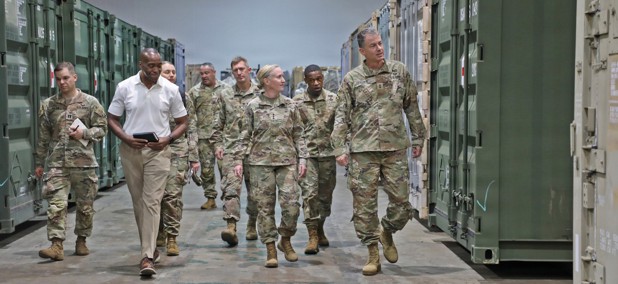
“We cannot win if our supply lines are 5,000 miles long,” says U.S. Forces Korea commander.
The increased focus on potential conflict scenarios in the Indo-Pacific region is bringing long-standing logistical challenges to the forefront of military planning and public discourse.
This highlights a critical vulnerability in US military strategy for potential large-scale conflicts, suggesting that current capabilities may be insufficient for sustained operations far from home.
The growing recognition of logistical constraints may accelerate shifts in defense procurement, base distribution, and alliance strategies to prioritize sustainability over immediate readiness.
- · Logistics/Supply Chain Tech
- · Defense contractors focused on expeditionary capabilities
- · Forward-deployed allied nations
- · Traditional large-platform defense manufacturers
- · US long-range power projection (if issues are not addressed)
- · Pacific adversarial forces (if issues are addressed)
The US military will likely increase investment in distributed logistics, prepositioned stocks, and autonomous resupply technologies.
Alliances in the Indo-Pacific may deepen further as partners become crucial hubs for supply chain resilience and sustained operations.
This could lead to a strategic reassessment of global force posture, potentially shifting resources and priorities away from other regions to enhance Pacific sustainability.
This signal links to a primary source. Continuum Brief monitors and indexes it as part of the live intelligence stream — we do not republish source content.
Read at Defense One