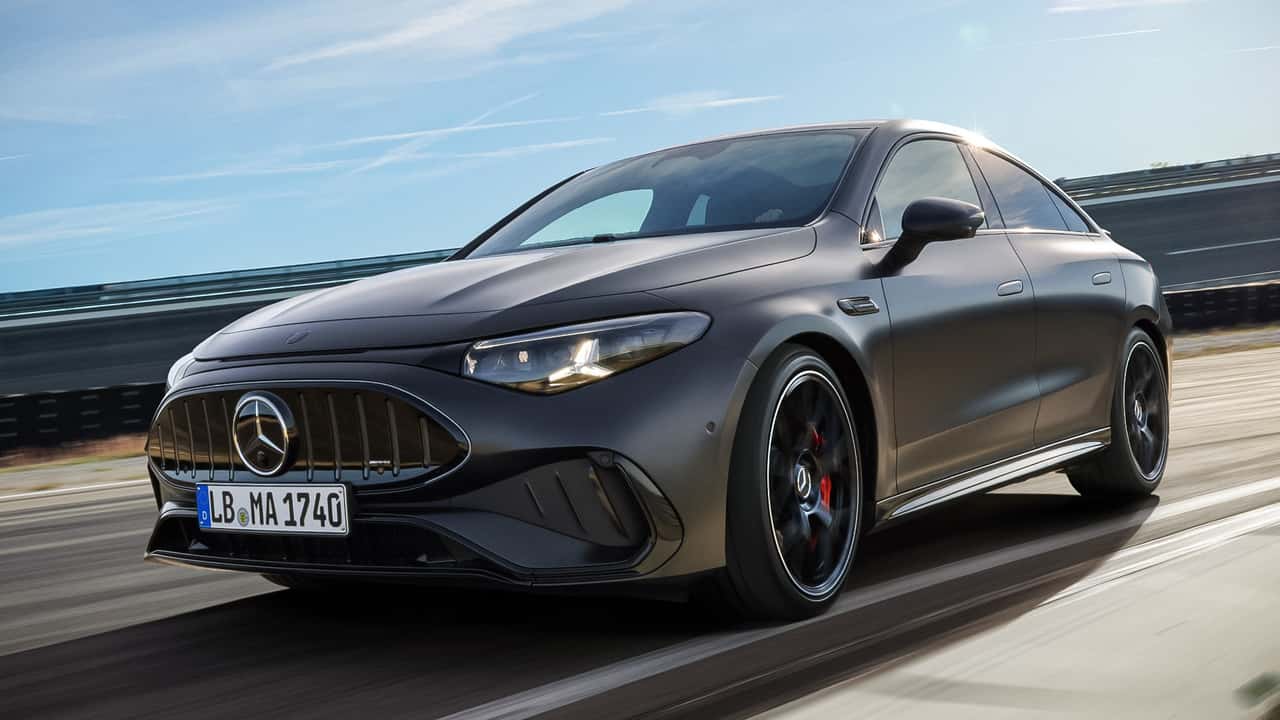
The four-door sedan puts down 670 horsepower, thanks to a set of ultra-compact axial flux motors.
Advances in electric motor technology, particularly axial flux designs, are reaching commercial viability, driving performance gains in electric vehicles.
This development indicates a significant leap in EV powertrain efficiency and power density, influencing future vehicle design and competitive landscape.
Electric vehicles can now achieve higher power outputs with smaller, more efficient motors, potentially impacting vehicle packaging, range, and cost.
- · Mercedes-AMG
- · EV Performance Segment
- · Axial Flux Motor Manufacturers
- · Luxury EV Consumers
- · Traditional ICE Performance Vehicles
- · Less Efficient EV Powertrain Technologies
High-performance EVs become more competitive against traditional sports cars, attracting a broader market.
Increased demand for advanced motor materials and manufacturing processes, potentially leading to supply chain specialization.
The pursuit of extreme power density in EVs could lead to new challenges in thermal management and battery design.
This signal links to a primary source. Continuum Brief monitors and indexes it as part of the live intelligence stream — we do not republish source content.
Read at InsideEVs