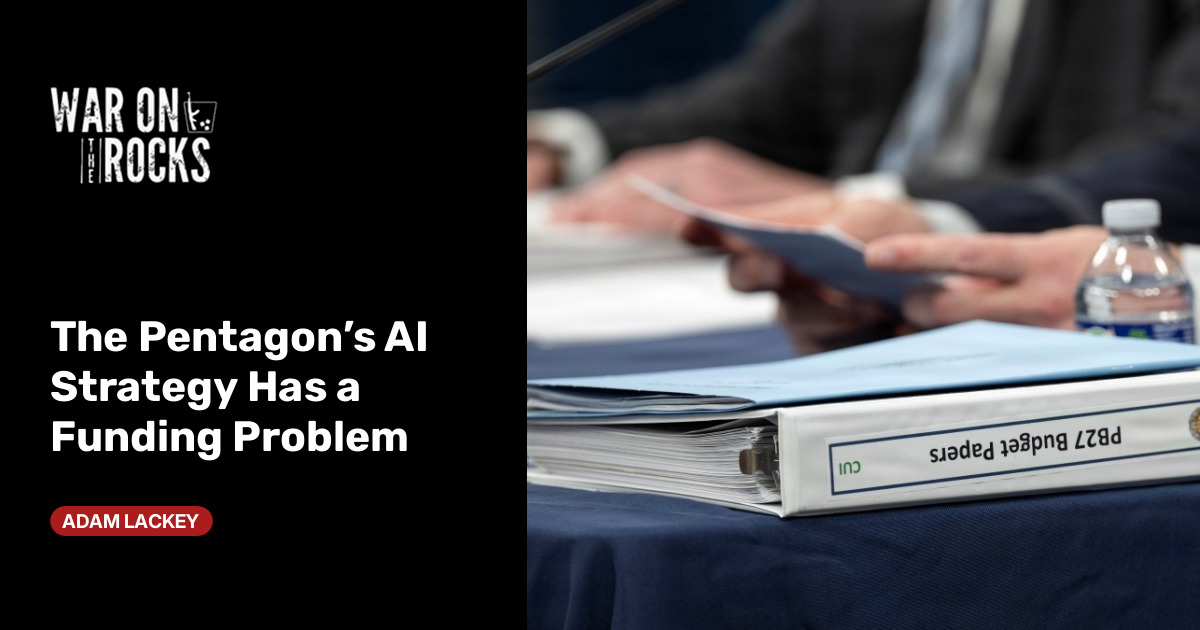
In the span of two weeks, the White House issued two of the most ambitious artificial intelligence directives in American history. On June 2, President Donald Trump signed an executive order mandating rapid AI adoption and hardened cyber defense across the government. Three days later, National Security Presidential Memorandum 11 directed every element of the national security enterprise to accelerate AI adoption, anchored by four pillars: adoption, adaptation, assurance, and accountability.The strategy is sound. The harder challenge is execution, and a fiscal squeeze on the Fiscal Year 2026 o
The Trump administration has recently issued two ambitious AI directives, the executive order and National Security Presidential Memorandum 11, pushing for rapid AI adoption across the U.S. government and national security apparatus.
This move highlights the U.S. government's intent to lead in AI, but the article points to significant funding challenges in FY2026, which could hinder effective implementation and strategic competitiveness.
The explicit focus on AI adoption in national security is clear, but the impending fiscal squeeze introduces uncertainty about the pace and success of these initiatives.
- · AI defense contractors
- · Cybersecurity firms
- · U.S. defense AI readiness (if underfunded)
- · Traditional defense programs (potentially vying for resources)
The Pentagon will struggle to fund mandated AI initiatives, necessitating difficult prioritization decisions.
Insufficient funding could delay the U.S.'s technological advantage in defense AI relative to adversaries.
A potential shift in strategic partnerships or reliance on commercial AI solutions could emerge to bridge funding gaps.
This signal links to a primary source. Continuum Brief monitors and indexes it as part of the live intelligence stream — we do not republish source content.
Read at War on the Rocks