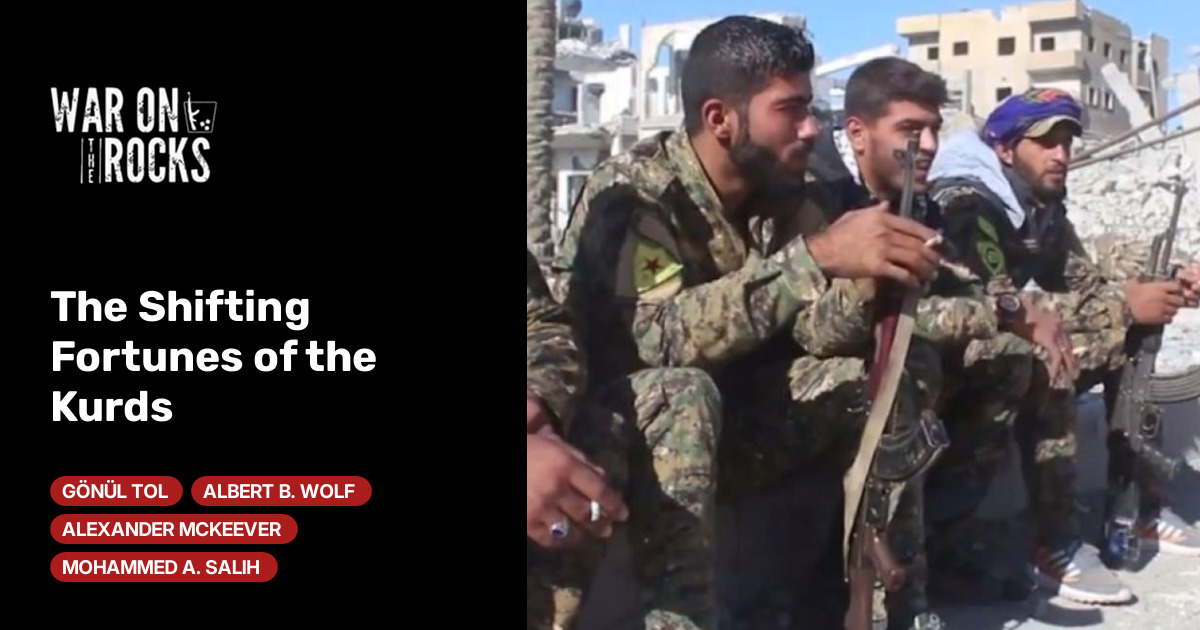
The Kurds’ fortunes have ebbed and flowed in recent years, but the fall of the Assad regime in Syria in December 2024, the 2025 decision by the Kurdistan Workers’ Party (PKK) to dissolve and engage in talks with the Turkish government, and the 2026 U.S.-Israeli war with Iran had enormous ripple effects on the lives of Kurds in the Middle East and Kurdish hopes for autonomy. We asked four experts to assess how recent regional events are presenting risks and opportunities for the Kurds in Turkey, Iraq, Syria, and Iran.Read more below. Gönül TolSenior Fellow at the Middle East InstituteThe Iran T
The combination of the Assad regime's fall, the PKK's dissolution, and the US-Israeli war with Iran in 2026 creates a unique confluence of events fundamentally reshaping the Kurdish geopolitical landscape.
These events represent a significant recalibration of power dynamics in the Middle East, directly impacting the long-term aspirations of the Kurdish people and potentially redrawing regional alliances and borders.
The Kurdish struggle for autonomy is now framed by new regional actors, dissolved historical antagonisms, and direct engagement with former adversaries, fundamentally altering their strategic calculus.
- · Kurds with greater autonomy
- · Turkey (reduced PKK threat)
- · Israel
- · United States
- · Iran
- · Syrian government (Assad regime)
- · PKK as an insurgent group
The geopolitical landscape of the Middle East undergoes a substantial reorganization, with new power vacuums and alliances emerging.
Increased stability or conflict depending on how the new Kurdish entities interact with neighboring states and their pursuit of greater self-determination.
Long-term shifts in energy supply chains and security architecture for the wider region, potentially impacting global markets.
This signal links to a primary source. Continuum Brief monitors and indexes it as part of the live intelligence stream — we do not republish source content.
Read at War on the Rocks