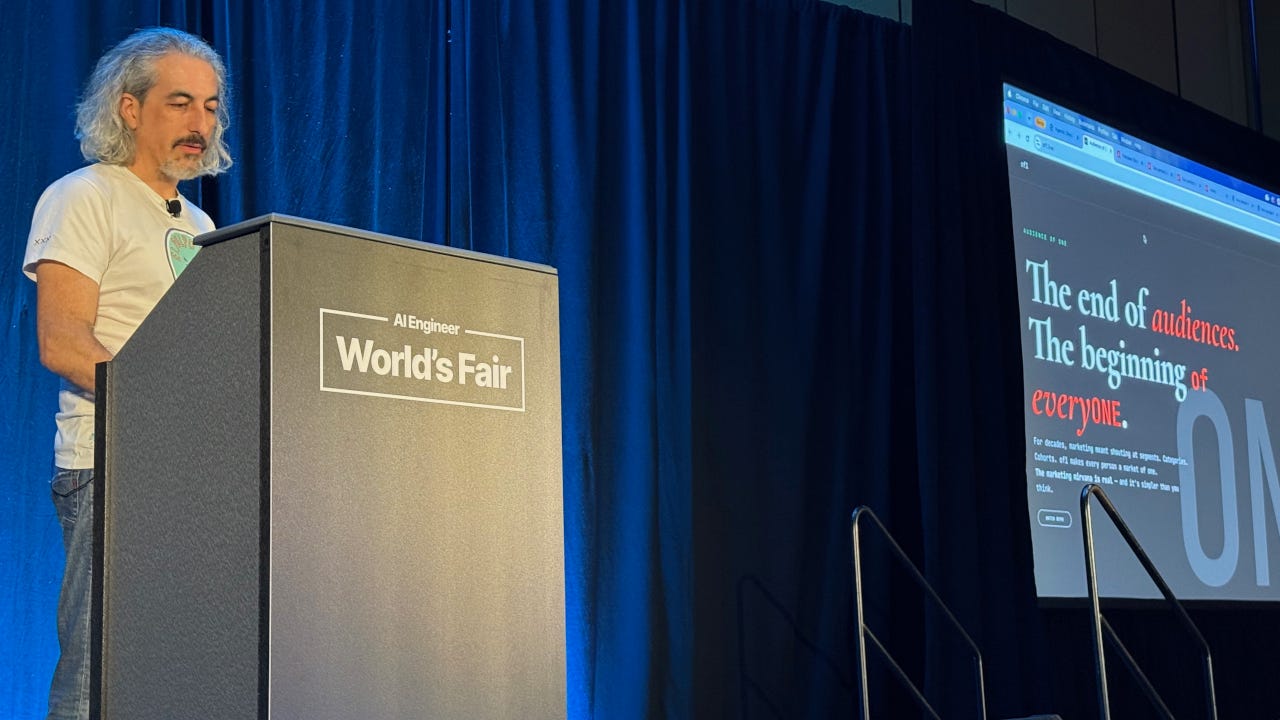
Adobe is experimenting with “agentic sites” that generate pages around an individual user’s intent. At AIEWF, we talked to Carlos Sanchez about the Web's future.
Advances in large language models and generative AI enable the real-time, personalized generation of complex digital content, making agentic interfaces feasible now.
This signifies a fundamental shift in how users interact with the web, moving from static pages to dynamic, intent-driven digital experiences, impacting entire digital ecosystems.
The web experience will become highly personalized and adaptive, with websites transforming from fixed information repositories to bespoke, session-specific applications tailored to user needs.
- · Adobe
- · Generative AI platforms
- · UX designers adopting AI tools
- · E-commerce platforms
- · Traditional web developers
- · Static content management systems
- · Generic web advertising
- · SEO agencies focused on static content
Websites will autonomously reconfigure their layouts, content, and functionality for each user interaction.
This could lead to a 'death of the website' as a fixed entity, replaced by ephemeral, agent-generated interfaces.
The concept of 'web presence' for businesses will evolve from owning a domain to managing an AI agent that dynamically constructs experiences.
This signal links to a primary source. Continuum Brief monitors and indexes it as part of the live intelligence stream — we do not republish source content.
Read at Latent Space