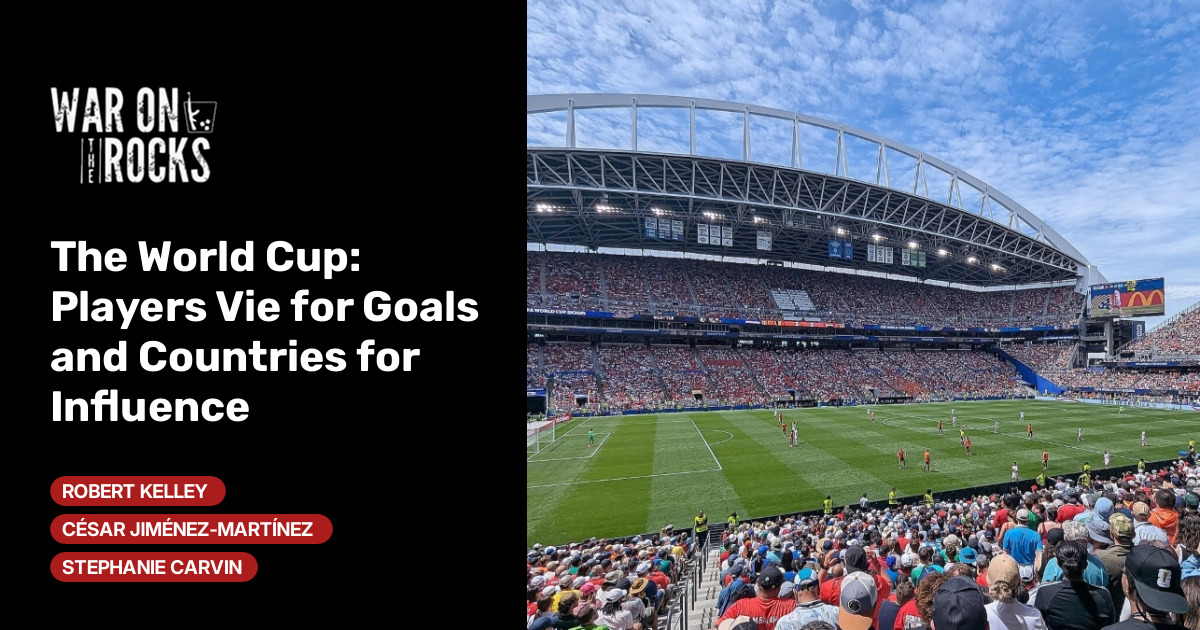
The 2026 FIFA Men’s World Cup is now well underway, bringing 48 countries’ teams to compete in a soccer tournament co-hosted by the United States, Mexico, and Canada. With teams from every continent except Antarctica, the 2026 tournament is a truly global event. The World Cup is often hailed as an opportunity for the world to come together and celebrate a shared passion for “the beautiful game” — creating an opportunity every four years for countries to gain attention, shape their reputation, and build influence.Although the joint U.S.-Mexican-Canadian bid intended to demonstrate North America
The 2026 FIFA World Cup, a major global event, provides a current and ongoing platform for nations to exercise soft power and project influence on an international stage.
Large-scale international events remain critical venues for countries to shape their global reputation, build diplomatic ties, and demonstrate economic or cultural strength beyond traditional hard power.
The explicit framing of the World Cup as an arena for geopolitical influence, rather than just sport, highlights the pervasive nature of state competition in seemingly apolitical domains.
- · Host nations (USA, Mexico, Canada)
- · Countries performing well diplomatically
- · Countries with strong cultural soft power
- · Countries with negative global reputations
- · Nations failing to capitalize on the event
Nations will continue to leverage major international events for strategic influence and image cultivation.
Increased competition among nations to host such events, seen as prestige and geopolitical tools.
The intersection of sports, culture, and geopolitics becomes a more explicit and funded area of national strategy.
This signal links to a primary source. Continuum Brief monitors and indexes it as part of the live intelligence stream — we do not republish source content.
Read at War on the Rocks