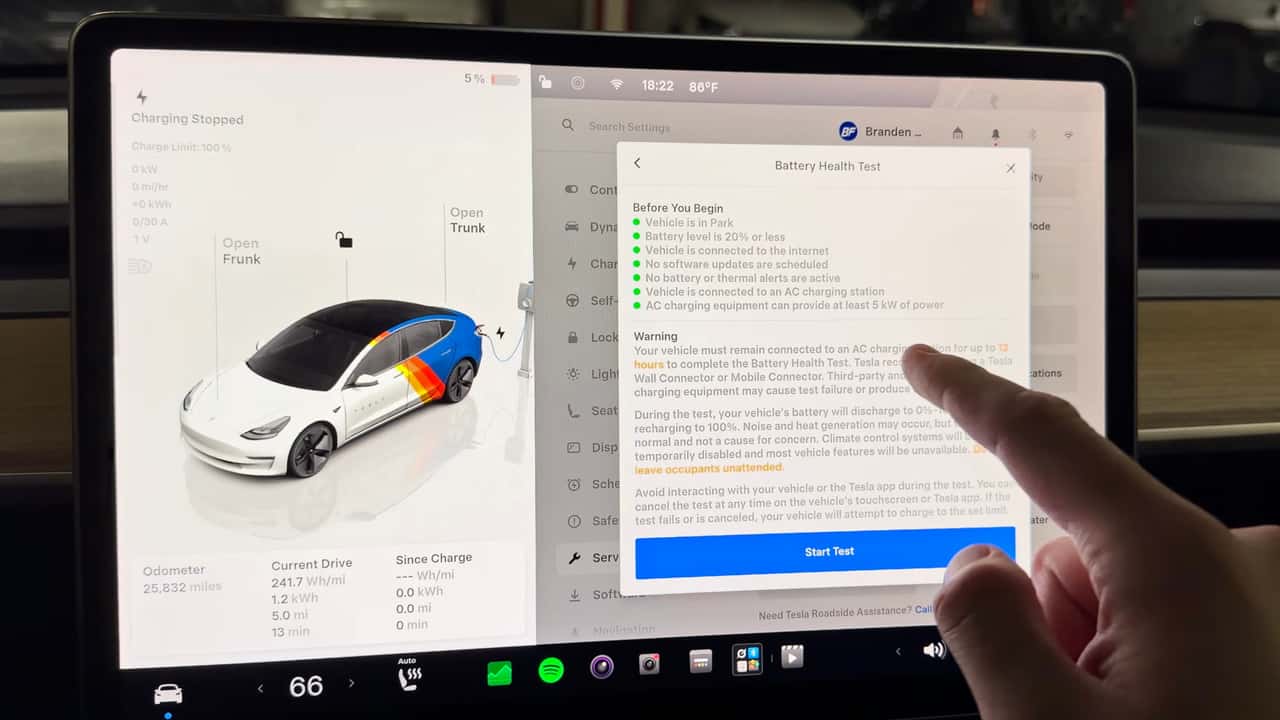
Its LFP pack had 90% health at 26,000 miles. That’s not a disaster, but it’s worse than the chemistry’s reputation suggests.
The increased adoption of LFP batteries in EVs is leading to real-world data emerging, challenging some initial performance expectations.
Battery degradation is a critical factor for EV adoption, resale value, and long-term sustainability, directly impacting consumer confidence and manufacturing strategies.
Optimism about LFP battery longevity may need to be moderated as real-world use cases show performance that is not always superior to other chemistries.
- · Battery research and development
- · Battery replacement services
- · EV manufacturers relying solely on LFP durability for marketing
- · Early LFP EV adopters expecting minimal degradation
Increased focus on battery management systems and charging behaviors to mitigate degradation in LFP packs.
Potential for slower consumer adoption of LFP-equipped EVs if degradation concerns become widespread.
Accelerated investment in alternative battery chemistries or enhanced LFP formulations that promise superior longevity.
This signal links to a primary source. Continuum Brief monitors and indexes it as part of the live intelligence stream — we do not republish source content.
Read at InsideEVs