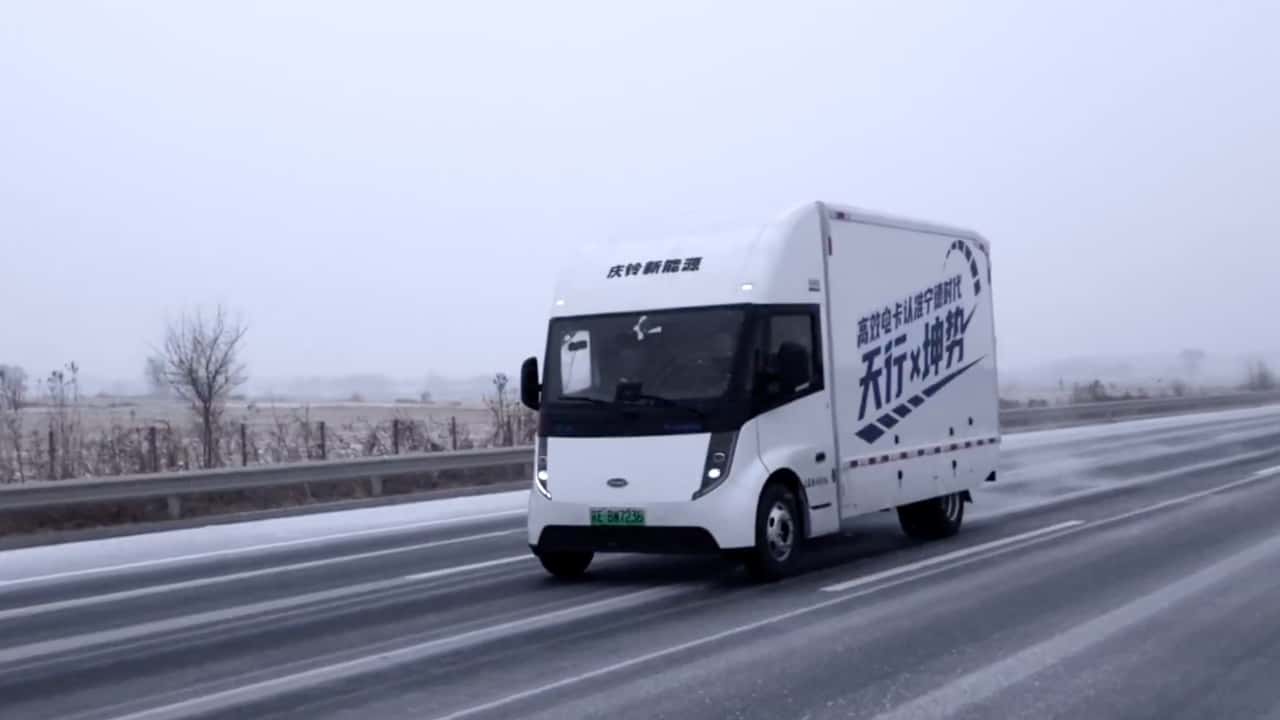
It also has a low-temperature sodium-ion version that barely loses range even in -40 degrees Fahrenheit.
Advances in battery chemistry and manufacturing, particularly in China, are accelerating, driven by competitive pressures and the demand for more efficient electric vehicle solutions.
This new battery technology significantly reduces charging times and improves cold-weather performance for commercial EVs, addressing major pain points for adoption and operational efficiency.
The viability and operational effectiveness of electric delivery vans and potentially other commercial vehicles will greatly improve due to faster charging and better performance in extreme temperatures.
- · Commercial EV fleet operators
- · Logistics companies
- · Battery manufacturers (e.g., CATL)
- · EV charging infrastructure providers
- · Internal Combustion Engine (ICE) vehicle manufacturers (commercial)
- · Oil and gas industry (long term, commercial transport)
- · Older EV battery technologies
- · Companies reliant on conventional fleet maintenance models
Widespread adoption of electric delivery vans becomes more economically and operationally feasible.
Urban logistics and last-mile delivery services experience a significant reduction in operational costs and increased efficiency due to faster turnaround times and reliable cold-weather performance.
This could accelerate the build-out of commercial-focused high-speed charging infrastructure and potentially shift urban commercial transport almost entirely to electric, reducing local emissions and noise pollution.
This signal links to a primary source. Continuum Brief monitors and indexes it as part of the live intelligence stream — we do not republish source content.
Read at InsideEVs