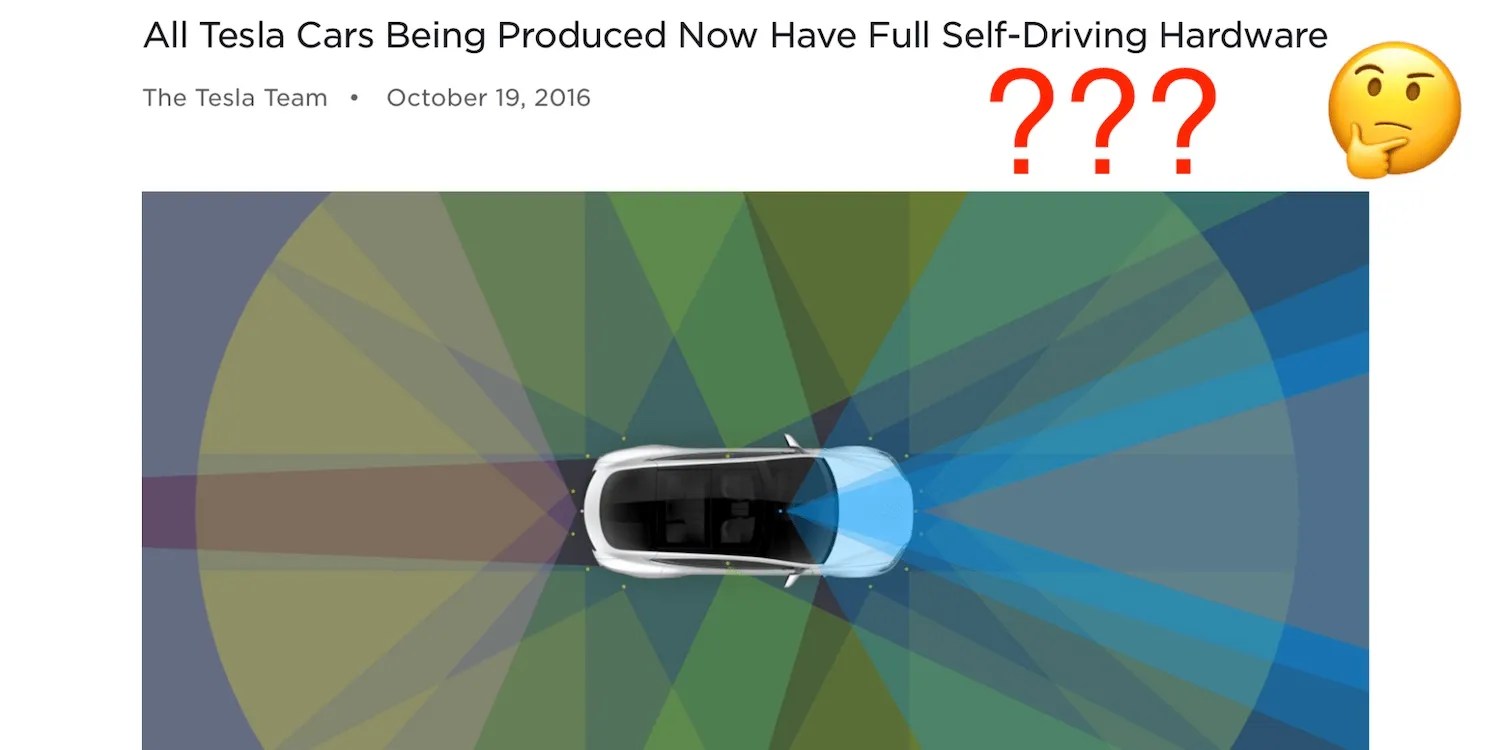
For over a decade now, Tesla has sold a promise of vehicles that can drive themselves, even stating that every car it produced had all the hardware for self-driving . But after years of the company being unable to deliver, some owners want their money back. Ben Gawiser is one of those owners, who recently won a $10,600 judgment due to Tesla’s failure to deliver. But Tesla kept fighting to delay payment, even just a few days at a time. ( 5/29 Update , original post 5/2 : He finally got his money back. This article has been updated with new information below) more…
The proliferation of advanced driver-assistance systems (ADAS) and promises of full self-driving (FSD) now face legal scrutiny as promised capabilities continue to fall short.
This case highlights growing consumer dissatisfaction and legal challenges against companies over unfulfilled promises regarding autonomous driving, potentially setting precedents for future disputes.
Companies marketing advanced autonomous features may face increased legal and reputational risks, leading to more cautious claims and potentially accelerating regulatory oversight.
- · Consumers seeking refunds
- · Lawyers specializing in consumer protection
- · Regulators
- · Tesla
- · Companies making ambitious FSD claims
- · Investors in FSD ventures
Increased class-action lawsuits and regulatory pressure on autonomous vehicle companies.
Companies may temper FSD claims, investing more in incremental ADAS improvements rather than grand self-driving visions.
Slower adoption rates for advanced autonomous features due to eroded consumer trust and legal uncertainties.
This signal links to a primary source. Continuum Brief monitors and indexes it as part of the live intelligence stream — we do not republish source content.
Read at Electrek