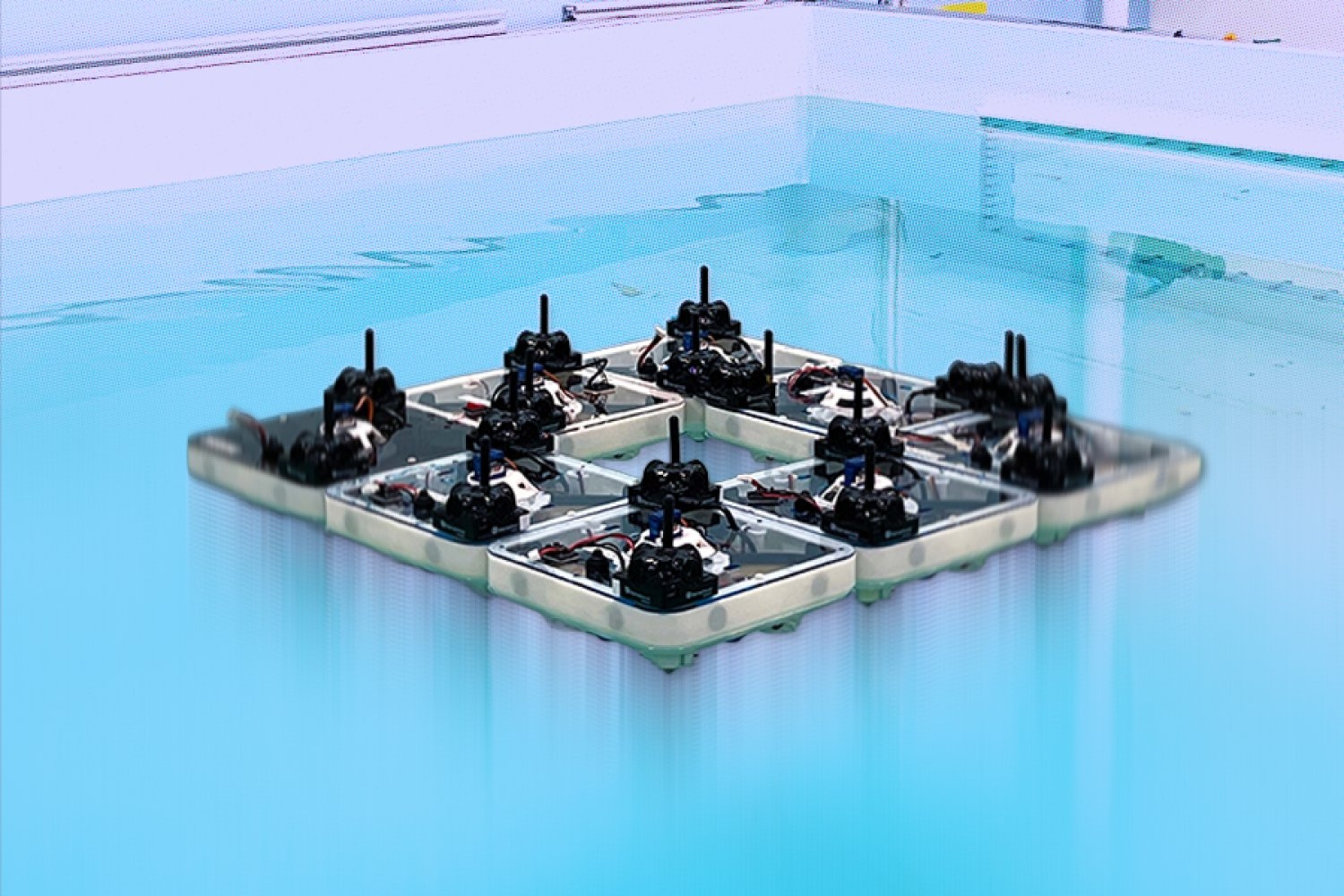
MIT researchers developed FloatForm, a swarm of small aquatic robots that snap together like ants forming a raft, assembling into reconfigurable structures on the water.
Advances in swarm robotics, bioinspiration, and AI-driven control systems are converging to enable more complex and adaptable robotic systems for environmental interaction.
This development represents a significant step towards autonomous, reconfigurable construction platforms that can operate in challenging aquatic environments, with implications for infrastructure, disaster response, and logistics.
The ability to dynamically assemble and reconfigure floating structures using autonomous swarms changes how infrastructure development and emergency operations might be conceived for aquatic settings.
- · MIT researchers
- · Robotics companies
- · Maritime logistics
- · Offshore energy sector
- · Traditional marine construction methods
- · Sectors reliant on static aquatic infrastructure
Autonomous construction of temporary or adaptive floating structures becomes feasible for various applications.
Increased resilience and flexibility in coastal infrastructure development and disaster relief efforts, particularly in dynamic water environments.
This technology could enable completely new forms of aquatic habitats, mobile infrastructure, or even self-assembling defence platforms in the long term.
This signal links to a primary source. Continuum Brief monitors and indexes it as part of the live intelligence stream — we do not republish source content.
Read at MIT News — AI