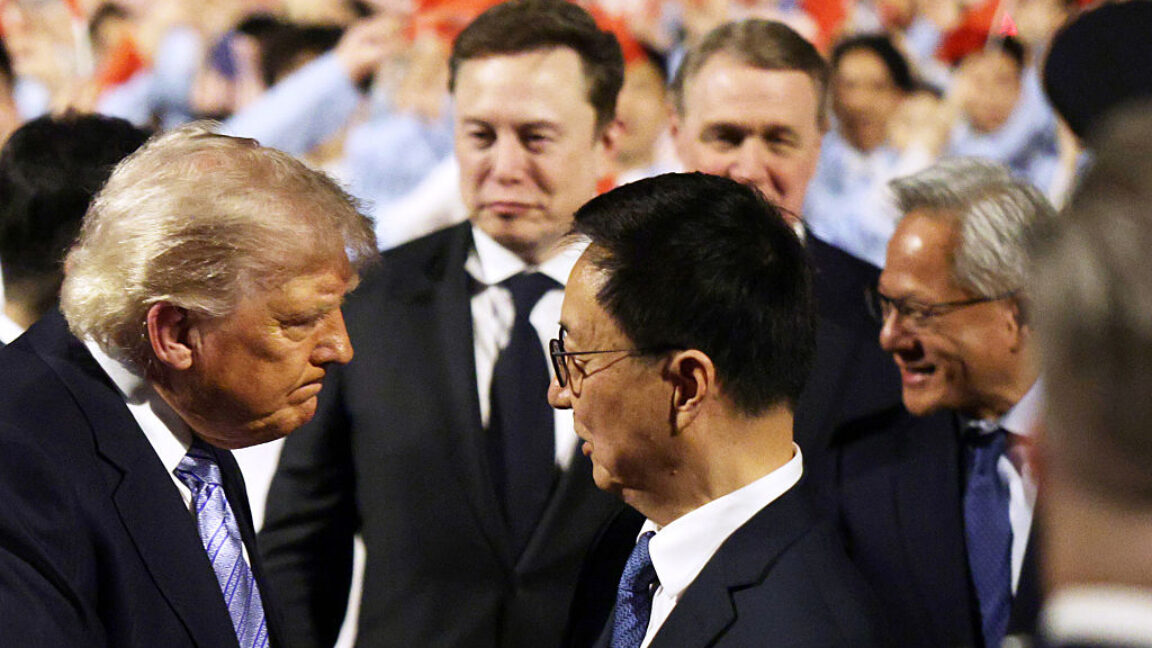
Trump delays AI safety testing EO, claiming it would be an innovation “blocker.”
The cancellation of the AI safety testing EO reflects a current political climate that prioritizes innovation and economic competitiveness over immediate regulatory burdens, especially under the influence of powerful tech industry voices.
This move signals a potential policy shift towards less stringent AI regulation in a crucial election year, which could impact the trajectory of AI development and the competitive landscape.
The immediate future of AI safety testing in the US leans towards industry-led initiatives rather than mandated federal oversight, potentially accelerating deployment but raising concerns about unchecked risks.
- · AI development companies
- · Tech CEOs
- · Innovation-focused policymakers
- · AI safety advocates
- · Regulatory bodies
- · Cybersecurity researchers
AI companies will face reduced immediate regulatory pressure allowing faster iteration and deployment of new models.
Public concern over potential AI risks may grow without clear government oversight, leading to calls for future intervention.
A competitive imbalance could emerge between nations with robust AI safety regulations and those with more permissive environments, influencing global AI leadership and ethical standards.
This signal links to a primary source. Continuum Brief monitors and indexes it as part of the live intelligence stream — we do not republish source content.
Read at Ars Technica — AI