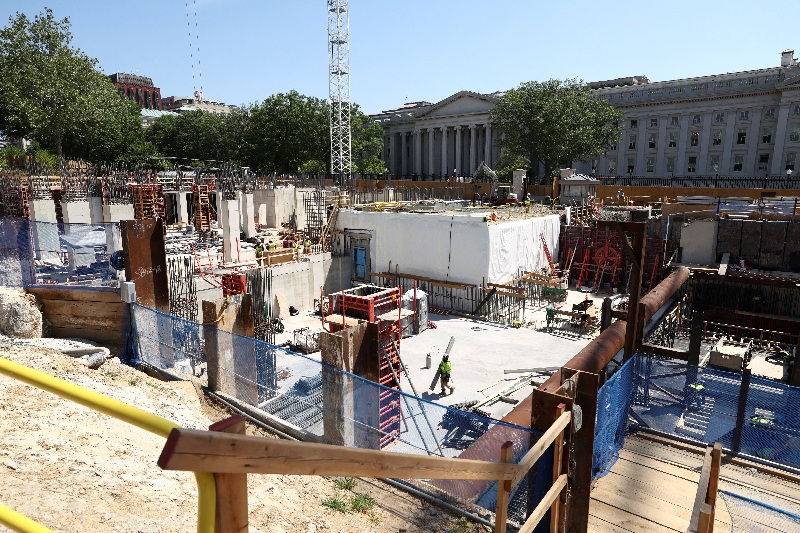
The president wrote that today's highly sophisticated weaponry means "we can no longer defend Washington, D.C., with rifles and pistols, alone."
The proliferation of advanced drone technology makes traditional static defenses obsolete for high-value targets, prompting leaders to seek updated security solutions.
This move signals a growing acknowledgement by top leadership of the critical role of modern drone and autonomous systems in defense, potentially accelerating their adoption in sensitive national security contexts.
The emphasis shifts from conventional perimeter security to integrating advanced aerial defense systems directly into high-security government installations.
- · Defence Tech Sector
- · Drone Manufacturers
- · Military contractors
- · Traditional security firms
- · Legacy air defense systems
Increased funding and research into compact, high-efficiency drone defense systems.
Other critical infrastructure and governmental facilities begin to emulate this 'drone port' model for enhanced protection.
The concept of defensive airspace control around important buildings becomes a standardized security requirement, leading to new regulatory frameworks and specialized industries.
This signal links to a primary source. Continuum Brief monitors and indexes it as part of the live intelligence stream — we do not republish source content.
Read at Air Force Times