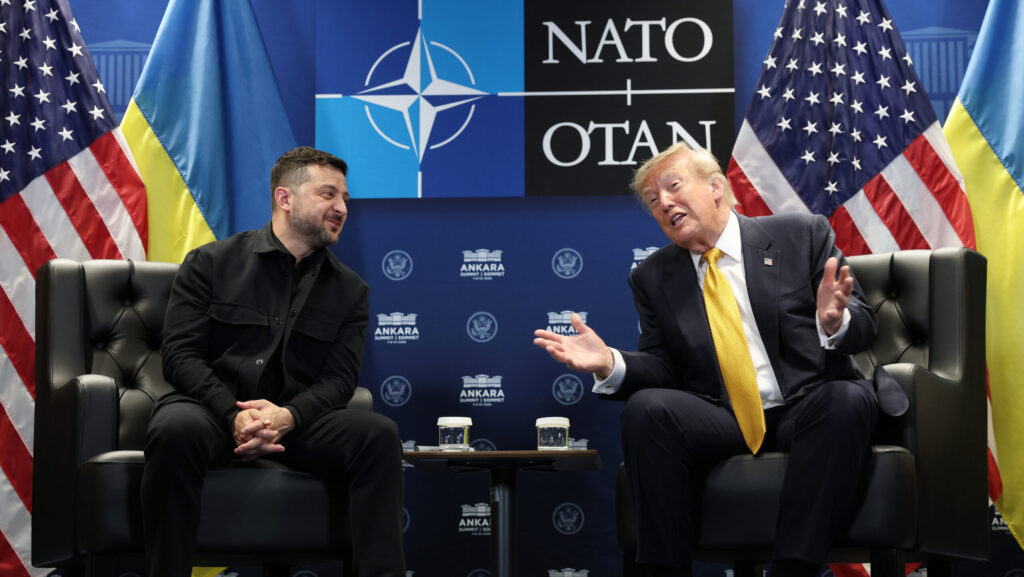
Kyiv has sought more Patriot interceptors to aid in its defense against Russian missiles and drones.
Amidst ongoing conflict, Ukraine's critical need for air defense and calls for increased allied military production capacity are driving discussions around novel procurement and production strategies.
This move signals a potential new paradigm for military aid, shifting from direct transfers to co-production or licensed manufacturing in recipient nations, which could boost their domestic industrial capacity and reduce reliance on external supply chains.
The explicit discussion of Ukraine-made Patriot interceptors suggests a possible future where advanced Western military systems are manufactured in conflict zones or by allied nations, redefining defense industrial base strategies.
- · Ukraine's defense industry
- · NATO's defense industrial base
- · Lockheed Martin
- · Russia's military strategy reliant on missile superiority
Ukraine gains increased, self-sufficient air defense capabilities.
Other allied nations may pursue similar co-production models for critical defense systems.
This could lead to a more decentralized global defense industrial base, with implications for technology transfer and intellectual property.
This signal links to a primary source. Continuum Brief monitors and indexes it as part of the live intelligence stream — we do not republish source content.
Read at Breaking Defense